 Field
Field 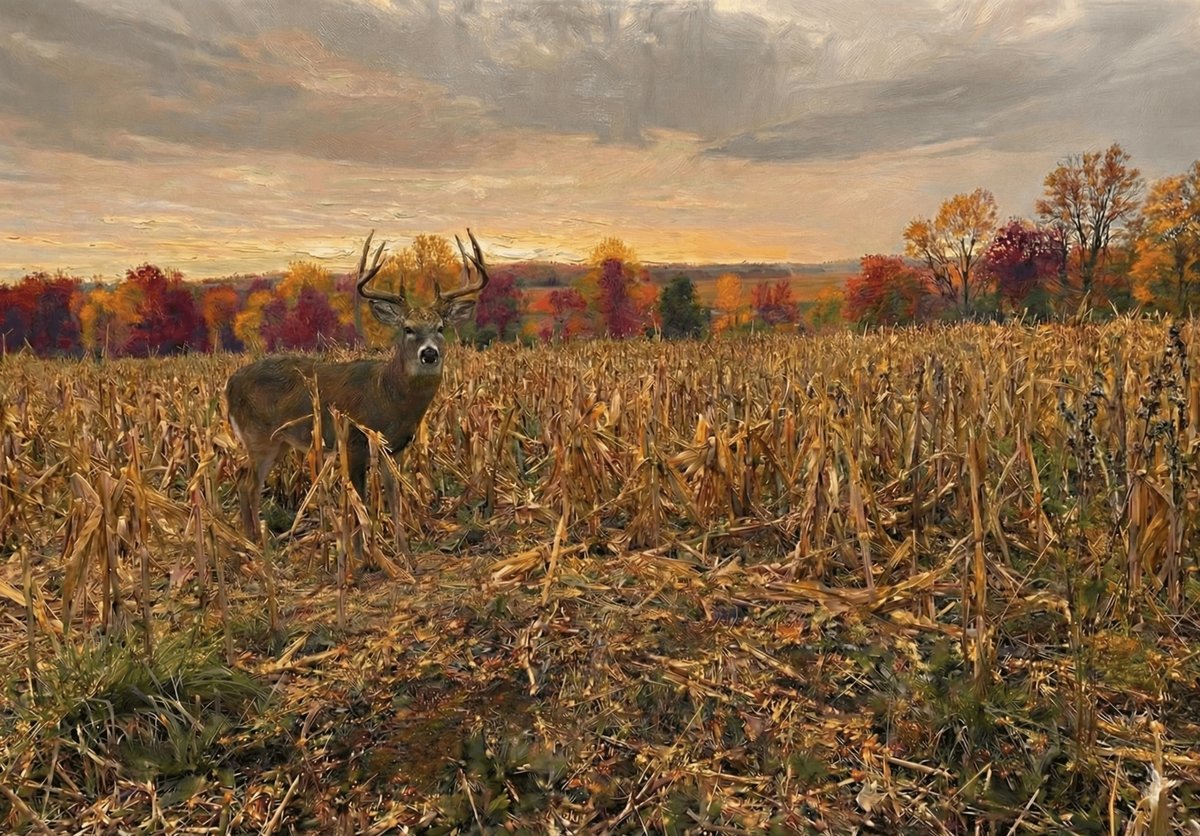
Deer season art isn’t just something to fill an empty wall—it’s a way to keep your head in the woods when you’re stuck at work, eating supper, or checking trail cam photos one more time before bed. If you’re anything like me, the obsession doesn’t switch on opening morning. It builds all year: the first velvet pictures in summer, the quiet patterning you do in September, and that electric shift in November when a buck can’t help but show his hand. The right image can take you right back to that feeling—cold air in your lungs, the hush before daylight, and the certainty that something’s about to happen.
At Field & Fen Art in Milton, North Carolina, we live in that same headspace. We make wildlife canvas prints for folks who know the difference between “pretty deer” and the real thing: heavy-bodied whitetails with rut-swollen necks, cautious does that lead a line through cover, and the kind of country that tells you exactly where to set up—if you’re willing to read it.
Deer season art that understands the calendar (and the woods)
Every part of deer season has its own mood, and you can feel it if you pay attention. Early season is still green and forgiving, but deer can be on a tight routine—especially does and young bucks. Food is king: soybeans, alfalfa, cut corn, white oaks dropping early, or a backyard persimmon tree that suddenly becomes a magnet. If your evenings are spent glassing field edges, you already know how the last ten minutes of light can make or break your confidence for the rest of the week.
Then the pre-rut sneaks in. It’s not the full chaos yet—more like a tightening spring. You’ll see fresh rubs appear like someone walked a line with a pocketknife, and scrapes start showing up in places that make sense: field corners, logging roads, the downwind side of doe bedding, and those little “communication hubs” where trails braid together. A mature buck may still move like a ghost, but the sign gets louder even when the deer stay quiet.
When you hang deer hunting wall art that reflects those shifts, it does more than look good—it keeps your mind sharp. It reminds you what to look for: the angle of a track in damp dirt, the way a buck uses cover to travel with the wind quartering into his nose, the reason that one scrape line keeps reappearing every year on the same downwind edge.
If you want a piece that captures that late-fall surge—the kind of moment that makes you hold your breath without realizing it—take a look at Sweet November Breakout. It carries that “something’s happening right now” energy that only November can deliver.
Deer hunting wall art inspired by real whitetail behavior
Whitetails aren’t random. They’re not robots either, but they do have rules—especially the older deer that survived enough seasons to learn what pressure feels like. A mature buck’s daylight movement is often a math problem: cover + wind + thermals + human access. He’s not just avoiding you; he’s avoiding the ways you move through the woods.
One of the most useful lessons deer can teach you is how they use the wind. In hilly country, thermals can flip the script. In the morning, cool air tends to sink; in the evening, warming slopes can pull scent uphill. That’s why you can feel “perfect” on a weather app and still get busted. In flatter country—like plenty of coastal plain and piedmont ground—wind still matters, but micro-cover matters too. A buck may walk the downwind side of a thicket, checking a bedding area without ever stepping inside it. That’s not an accident; that’s strategy.
Does have their own logic. During the rut, a mature doe often leads movement through thick stuff, especially if she’s got yearlings with her. If you’ve watched a group filter out, you’ve probably noticed the pause-and-look routine—heads up, ears pivoting, then one more step. That behavior is why good hunting setups give you a shot window that doesn’t rely on deer standing in the open.
That’s also why a piece like Harvest Sentinel hits home for hunters. It’s not just a deer in a frame; it’s the feeling of being watched by the woods, the way a buck can appear like he was poured out of the shadows. You know the moment: you’re scanning brush that looks empty, then a tine tip or an ear flick gives him away.
Whitetail deer prints that feel like your stand: fields, clearcuts, and timber edges
The best hunting spots usually aren’t “deep woods” or “wide open”—they’re edges. A whitetail’s whole world is built on transitions: hardwoods meeting pines, CRP meeting crop fields, creek bottoms cutting through ridges, or a clearcut growing up into bedding cover. Those edges create predictable travel because deer can feed or move while still staying close to security.
Clearcuts are a perfect example. Give a cut two to five years and it can turn into a fortress—stemmy regrowth, briars, saplings, and enough browse to keep deer close all day. Bucks love bedding with their back to a thick wall and their nose covering the downwind side. They can watch the open with their eyes and guard the cover with their nose. If you’ve ever eased along the edge of a cut and found a bed worn into the leaves with hair in it, you know exactly what kind of buck uses that spot.
That’s why Clearcut Bedroom resonates. It leans into the kind of ground that doesn’t look like much to a casual hiker, but to you it reads like a map: bedding, escape routes, feeding loops, and the faint promise of a daylight encounter if you can slip in clean.
Field edges bring a different rhythm. In agricultural country, a buck might stage in cover before stepping out. That “staging area” is where your best last-light opportunities happen—often 30 to 80 yards inside the woods, not on the field line. You’ll see it in sign: clustered rubs, a few hot scrapes, and trails that suddenly become highways. If you hang whitetail deer prints that capture that edge-country tension, it’s like keeping a mental pin dropped on the places that consistently produce.
Deer season art for the rut: reading pressure, movement, and “standoffs”
The rut is the part everybody talks about, but the most consistent rut success usually goes to the hunters who understand what pressure does to movement. When the woods fill up with boot tracks, four-wheelers, and scent, deer don’t stop rutting—they just change how and where they do it. Midday movement can actually increase in heavily pressured areas, especially on weekdays or during weather shifts, because bucks start cruising thicker cover and less obvious routes.
Cold fronts matter too, not because deer “like cold,” but because stable, high-pressure weather often makes movement more predictable. A sharp temperature drop can pull deer to their feet earlier, especially if food sources are concentrated. Windy days can also encourage movement in thicker cover—deer use noise and swaying vegetation as camouflage, but you’ll need to plan for limited hearing and fast shots.
Then there’s that tense moment that every hunter recognizes: two deer seeing each other at the same time, neither fully committing. A buck stops short, head high, body rigid. A doe angles away, not running but not relaxed. The woods goes still. That’s not “deer posing”—that’s a live negotiation happening in real time, driven by dominance, caution, and wind.
Autumn Standoff captures that kind of charged pause—the kind that makes your release feel loud, your safety sound like a door latch, and your heart thump against layers of wool.
Deer hunting wall art that keeps you connected when you’re not in the woods
There’s a reason hunters decorate with the animals and places they chase. It’s not about trophies; it’s about identity. Deer season is a set of habits: checking wind before you leave the driveway, keeping your pack staged, watching leaves for moisture and sound, and remembering that access matters as much as stand location. When you put deer hunting wall art in a spot you see every day—by the gun safe, over your desk, near the coffee pot—it keeps those habits close.
It also keeps your memories honest. Not every sit is action-packed. Some are long and quiet, with just a squirrel making you question your life choices. But those sits build your understanding of a place. You notice when acorns are scarce, when the browse line rises, when the first frost changes the smell of the woods. Art that reflects real whitetail country honors those details instead of glossing over them.
If you want to see the full lineup built around that mindset, spend a little time in our Whitetail Deer Collection. Browse it the way you’d still-hunt a fresh strip of timber—slow enough to notice what pulls you in, and with an eye for the pieces that feel like your kind of country.
When you’re ready, take a look through the collection and pick the scene that matches the way you hunt, the places you’ve been, and the season you can’t stop thinking about.