 Field
Field 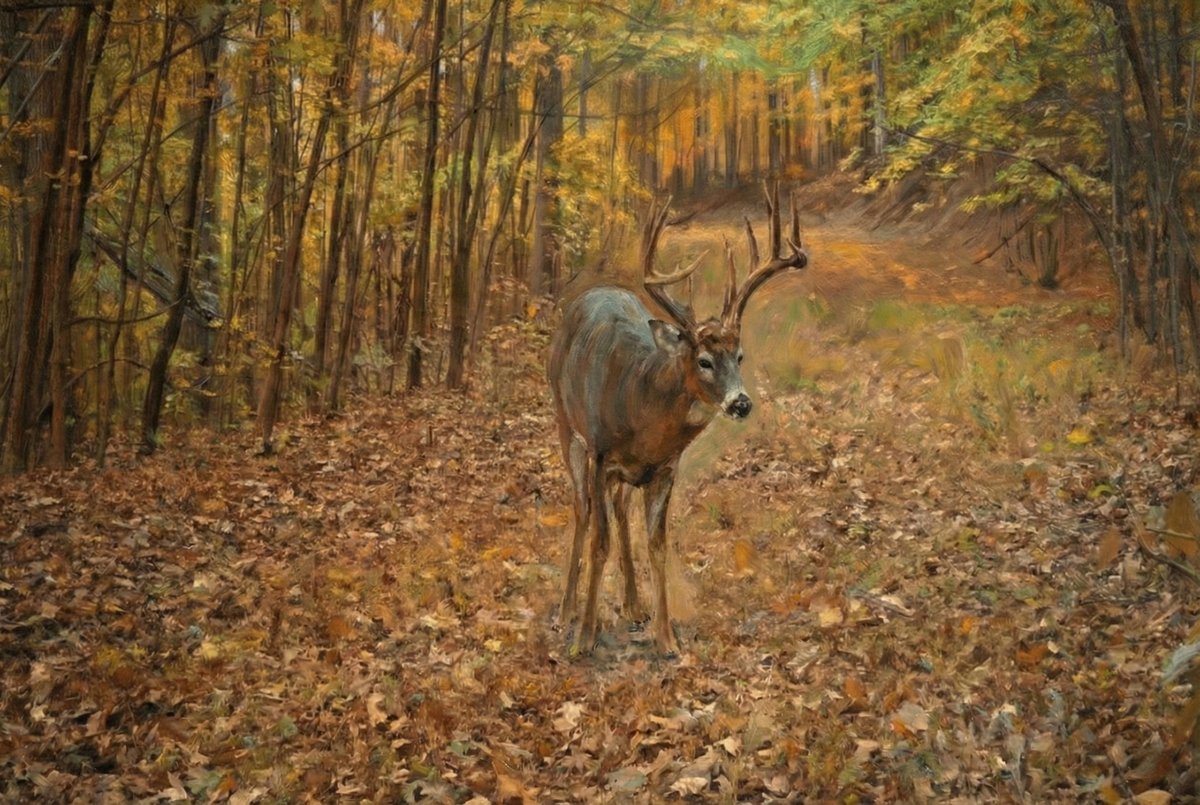
If you’ve ever noticed how much November deer art dominates cabin walls, lodge foyers, and the back pages of old hunting magazines, it’s not your imagination. November is when whitetails turn from ghosts into story-makers—when scrape lines pop overnight, rubs shine like fresh-cut cedar, and a buck you’ve only seen as a blurry trail-cam frame might suddenly materialize in shooting light with his nose on the wind. Artists chase that same electricity. Peak rut is movement, tension, and decision—all the ingredients that make a painting feel alive.
Here at Field & Fen Art in Milton, North Carolina, we see it every season: hunters want art that doesn’t just show antlers—it brings back the moment. The cold breath, the leaf-fall hush, the sudden crackle of a buck dogging a doe through the oaks. November is painted so often because it’s the month whitetails finally show you who they are, and it’s the month you’re most likely to witness it.
November Deer Art Starts With a Real Change in the Woods
By early November, the hardwoods have thinned out enough that you can see deeper into the timber, but there’s still just enough cover to keep a buck bold. That shift matters for art. A lot of October deer scenes lean “patterning”—bucks on a food source, daylight movement tied to acorns or the last green strips. November, though, is when the woods trade routine for urgency.
Here’s what’s actually happening: testosterone has been rising since late summer, but it’s now reaching the levels that drive bucks to roam, check bedding edges, and test any rival that looks like he might steal a doe. You’ll see the classic rut sign stack up fast—fresh rubs on wrist-thick saplings, gouged to bright wood; scrapes opened under licking branches along field corners and logging roads; and tracks that suddenly look like someone dragged a two-by-four through damp leaves.
That’s why November deer art feels so “busy” in the best way. You’re painting (or hanging) a month when the landscape is full of readable sign. It’s not just a buck standing there. It’s a buck with a purpose, traveling a line that makes sense to anyone who’s ever eased along a ridge and found rubs every twenty yards like breadcrumbs.
If you want a piece that captures that late-fall atmosphere—cool light, shifting cover, and the sense that something is about to happen—take a look at November Harvest. It’s the kind of scene that feels like the minutes right before the woods breaks open.
Peak Rut Art: The Drama Comes From Doe Behavior, Not Just Big Antlers
Most folks talk rut like it’s a buck-only story. But the real plot is driven by does. When a doe comes into estrus, everything changes around her. You’ll see a buck “tending” her—staying close, circling downwind, pushing her when she tries to slip off. Sometimes he’ll bristle and posture at the slightest sound, because he’s guarding the most valuable thing in the woods for the next 24 to 48 hours.
That’s the heartbeat of peak rut art: proximity and pressure. Two deer in the same frame creates instant tension. It’s also why November scenes often show more than one animal—because that’s how you experience it from the stand. One deer appears, and it rarely stays a solo act for long.
During peak rut, you’ll catch bucks doing things they won’t tolerate any other time: crossing open lanes in daylight, cutting straight across a creek, trotting stiff-legged along a doe trail like they’re late to an appointment. That movement is what painters love. A buck mid-step with his head low, lip curled, and ears pinned back tells you more than a perfectly posed shoulder-mount stance ever could.
Some of the best rut visuals come from confrontations—two mature bucks stiffening up, angling their bodies, gauging each other before antlers touch. If you’ve ever had your heart thump from the sound of hooves raking leaves behind you, you already know why that scene belongs on canvas. Autumn Standoff leans into that pre-fight moment when the woods seems to hold its breath.
Rutting Buck Canvas and the “Nose-to-the-Wind” Look You Recognize
A true rutting buck doesn’t just look bigger—he looks different. His neck swells, his brisket seems to thicken, and his posture changes. He carries his head lower when he’s tracking, and he’ll hook his nose into every drifting ribbon of scent like it’s a map. That “nose-to-the-wind” profile is one of the most recognizable silhouettes in deer hunting, and it’s a big reason rutting buck canvas prints hit home.
Even the way a buck uses terrain in November is more dramatic. He’ll cruise the downwind side of doe bedding, side-hilling just below a ridge top where thermals and prevailing winds stack scent in his favor. He’ll use creek bottoms and ditch lines like travel corridors, slipping in and out of cover, checking each opening without committing. If you hunt funnels—pinch points between bedding and food, a saddle between ridges, a strip of timber between cut fields—November is when they can suddenly feel like a whitetail highway.
Artists who understand the rut paint those details: the buck quartering into the wind, the edge habitat that tells you where he’s traveling, the way leaf litter and bare branches create that high-contrast late-fall palette. That’s not decoration—it’s realism. It’s the difference between “a deer picture” and a piece that makes you smell wet oak leaves.
If you’re drawn to a buck that carries that classic November confidence—golden light, heavy body, and that sense he’s moving with intent—Golden Boy captures that late-season glow that often shows up right when the rut is rolling and the woods are opening up.
Why November Deer Art Often Shows Edges, Funnels, and “Toll Booths”
There’s a reason the best stand locations sound like you’re describing a traffic plan: “I’m on the inside corner,” “I’m watching the pinch,” “I’m set up on the crossing.” During November, deer movement gets less predictable in where it starts, but more predictable in where it has to go. Geography forces decisions. And those decisions are exactly what makes a scene paintable.
Think about the natural “toll booths” in your own spots: the fence gap that every deer uses because it’s the easiest hop; the creek crossing with the hard bottom; the narrow neck of timber between two open fields; the logging road saddle that connects ridge to ridge. When bucks are cruising for does, they’ll cover ground and they’ll take the path of least resistance—especially when they’re moving with their head down and their mind on scent, not danger.
That’s why November paintings often feel like they’re set on a stage. The edge of a cutover meeting mature woods, the corner of a bean field, the mouth of a hollow—those are places where deer naturally “show themselves.” They’re also places hunters naturally watch. When art puts a buck in that kind of bottleneck, it doesn’t feel staged. It feels like the exact lane you’ve been waiting on, bow in hand, listening for the first crunch of leaves.
For a piece that leans into that concept—movement channeled by the landscape, a buck committed to a crossing—Pay The Toll is a fitting nod to how November deer get funneled into the places that make your pulse jump.
Peak Rut Art Is Really About Light, Sound, and the Split-Second Decision
If you asked ten hunters what they remember most about November, you’d hear a lot about feeling—not just sightings. The light is thinner and slants lower. Mornings can start with frost that squeaks under your boots, and afternoons can warm just enough that thermals switch and the wind starts doing tricky things along the creek. Those details matter in art because they matter in real hunts. They’re the difference between a buck circling into your wind or walking your shooting lane.
Rutting season also has a soundtrack. You’ll hear a buck grunting—short, purposeful notes that come closer, then fade, then swing around as he checks the downwind side. You might hear antlers tick in brush, or the hollow pop of hooves hitting frozen ground. Sometimes it’s dead silent until it isn’t, and that contrast is pure November.
And then there’s the decision. November is full of them—when to rattle, when to stay still, when to let a young buck pass because you know a bigger one is likely cruising behind him. That decision-making shows up in the way you respond to a piece of art, too. The best peak rut scenes don’t just show an animal; they put you back in the stand, replaying what you would do if that buck took three more steps.
If you’re building a wall that tells the whitetail story from pre-rut tension to full November chaos, start with the Whitetail Deer Collection. Wander through it like you’d still-hunt a fresh ridge after a cold front—slow, attentive, and ready for something that feels familiar for all the right reasons.
When you’re ready, browse the collection and pick the scene that matches your November—the one that looks like your timber, your field edge, your kind of morning. That’s where the best deer art lives anyway: not in a catalog, but in the memories you carry back out of the woods.