 Field
Field 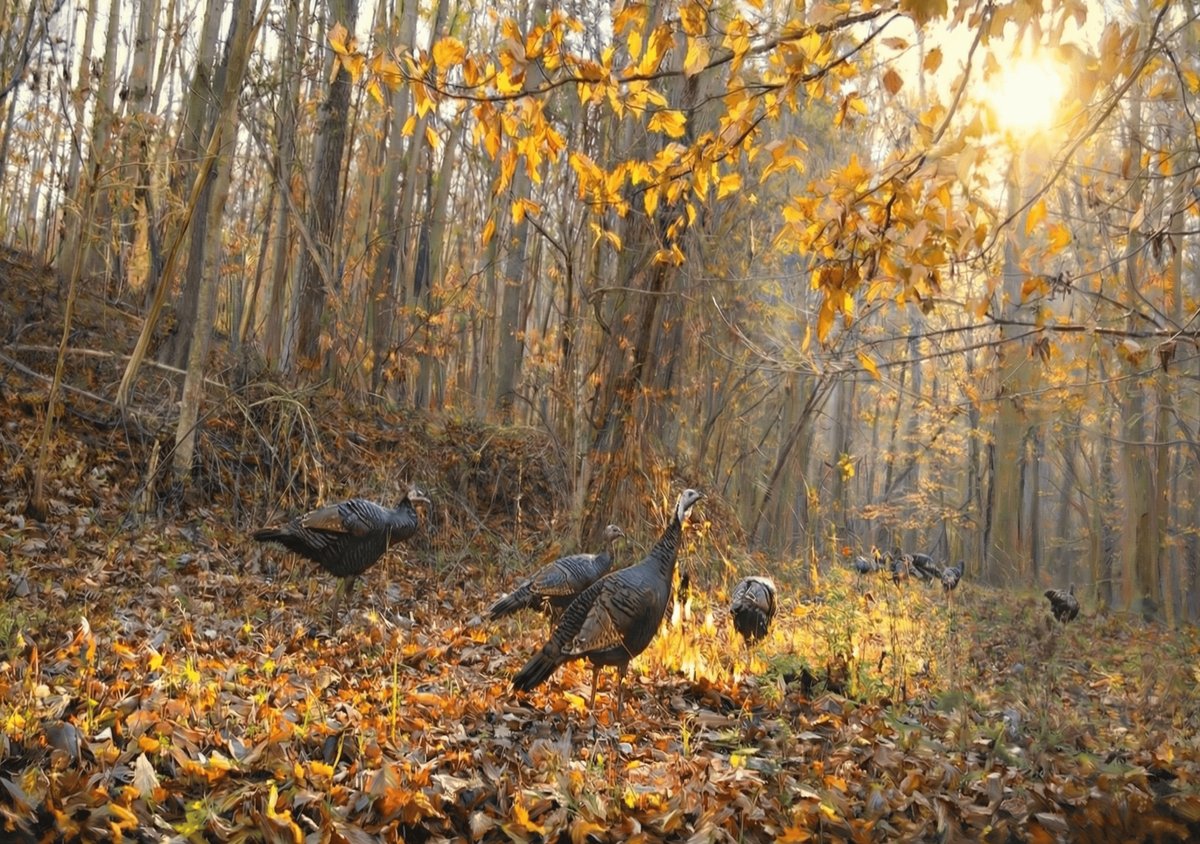
There’s a certain kind of spring morning that gets under your skin—the kind where the woods are still dark, your breath hangs in the air, and a gobbler answers from a ridge like he owns the whole county. That’s why wild turkey art hits different than most “wildlife décor.” A good turkey painting doesn’t just show feathers and color; it brings back the sound of that first gobble, the patience of a slow setup, and the way your heart thumps when a fan finally breaks the edge of the brush.
Here in the Piedmont and coastal plain country around Milton, North Carolina, spring turkey season is a whole mood. The dogwoods start thinking about blooming, redbuds pop along the creek bottoms, and the woods wake up in layers—peepers in the low spots, songbirds tuning up, and gobblers starting their daily script. When you hang a turkey canvas on your wall, you’re not hanging “a bird.” You’re hanging a morning you worked for.
At Field & Fen Art, that’s the goal: prints that feel like the real thing—like the kind of encounter you replay in your head on the drive home. Below, let’s talk about what makes a spring gobbler such a worthy subject, what’s actually going on in the woods when toms strut and fight, and how the right turkey canvas prints can keep that season close even when the tags are filled and the woods have gone green.
Spring gobbler behavior: what you’re really seeing when a tom struts
That “classic” spring gobbler pose—tail fan wide, wings dragging, head lit up like a neon sign—isn’t just for show. Strut is a dominance and attraction display, and it’s tightly tied to breeding timing and social pecking order. Early in the season, you’ll often hear gobbling hot at fly-down because hens are still on the roost nearby, and toms are trying to gather the attention of the whole neighborhood before the ground game starts.
Once they pitch down, reality sets in. If hens drift away to feed or head toward nesting cover, a gobbler may go quiet and follow—especially if he’s got a small harem already. That’s why your best “talking” window can be that first hour after daylight when birds are still sorting out where everyone is. If you’ve ever watched a longbeard strut in a logging road and then disappear like smoke the moment a hen yelps from the next ridge, you’ve seen biology override bravado.
Mid-morning is where seasoned hunters make their money. Hens often peel off to lay, and subordinate toms—those birds that didn’t win the early social battles—start cruising. They’ll gobble less consistently, but they’re huntable because they’re looking. It’s also when you might catch a gobbler coming in silent, drumming so low you feel it more than hear it. That low-frequency “thump” and the spit at the end are close-range tells that can make a static painting feel like it’s got sound baked into it.
Wild turkey art that captures the “ring” of a real fight
Every turkey hunter has seen it or heard it: two toms squaring up like heavyweight fighters, circling, wings slapping, spurs trying to find purchase. It can be fast and brutal, and it’s not always about hens in the moment—sometimes it’s simply a correction of the pecking order. Subordinate birds will posture, then bail, but two evenly matched toms can commit, especially when they’ve been sharing the same strut zone for days.
Those fights often happen in places turkeys already like: open hardwood flats with good visibility, field edges where they can see danger coming, or grassy roads that make strutting easy. If you’ve got a property with a consistent “dance floor,” you know it. Look for drag marks where wings have swept the ground, tracks in a tight circle, and feathers that don’t look like the occasional shed—they look like a scuffle.
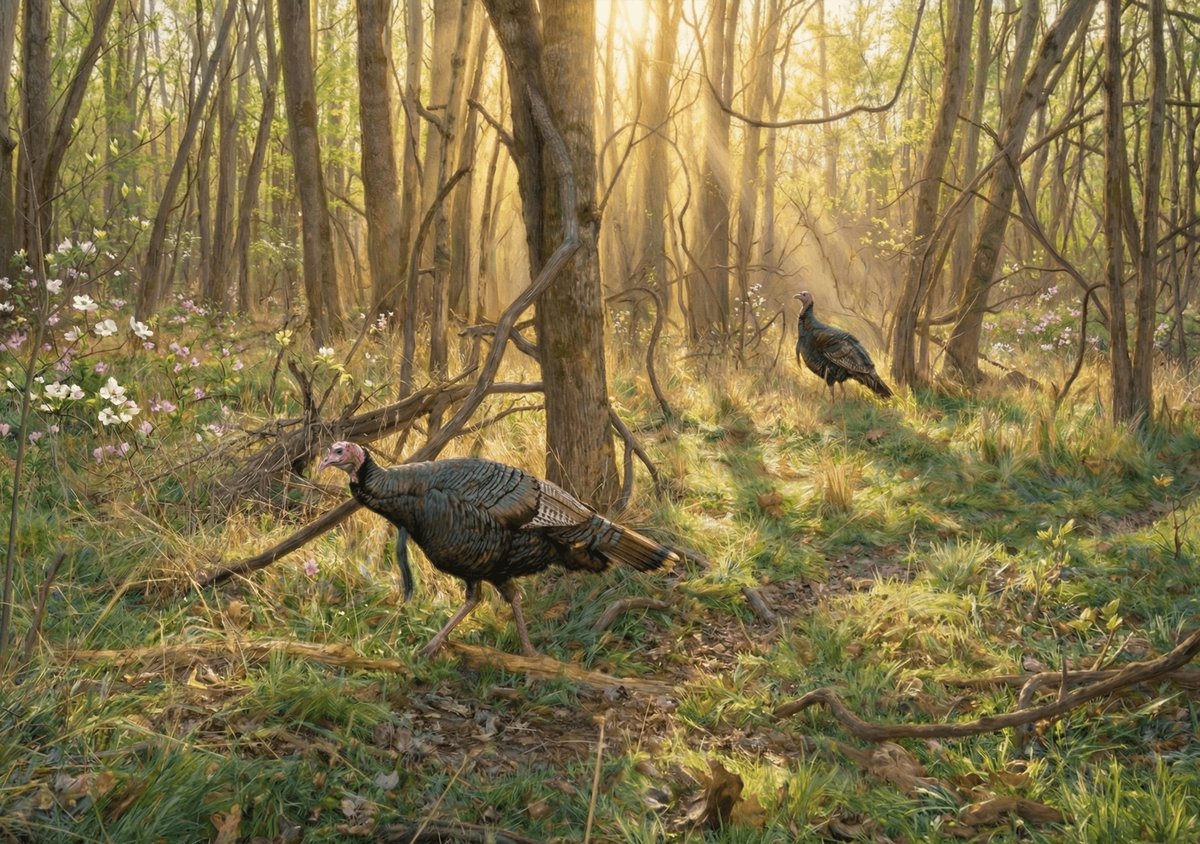
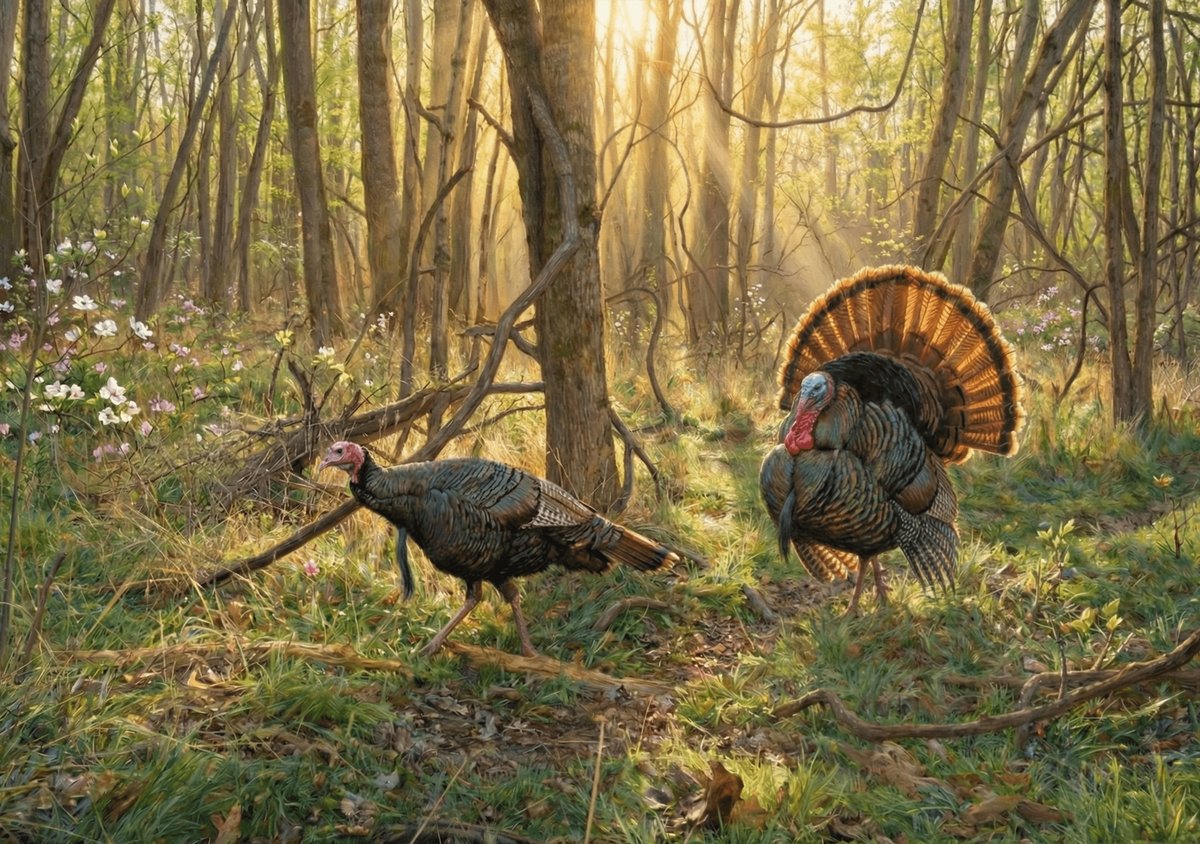
That tension is exactly what makes a piece like Ringside Seat so fun to live with. It’s not just two birds in frame; it’s the whole moment you’d normally witness through saplings with your face painted and your hands clenched around a call. Art that shows conflict well also shows respect—because turkeys aren’t barnyard pushovers. They’re athletes, and spring is their arena.
Turkey canvas prints and the language of the woods: light, frost, and fly-down
A lot of folks talk about “patterning” a gobbler, but what you’re really learning is how turkeys use the land with the weather. On clear, cold mornings, birds often stay on the limb longer to soak in sunlight before hitting the ground. On damp, windy days, they may fly down earlier into sheltered bottoms where sound carries poorly and predators have the advantage. If you’ve ever set up on a ridge expecting a classic fly-down-and-come-to-you scenario and instead watched the whole flock sail into the next drainage, you learned a lesson turkeys teach fast: they do what’s safest for them, not what’s convenient for you.
Light matters too. The first slant of sun across a hardwood slope can turn a gobbler’s bronze and green into something almost unreal—like polished metal. That shimmer comes from structural coloration in the feather barbules, not just pigment, and it changes with angle. It’s one reason turkeys can look “black” in the shade and suddenly glow when they step into an opening.
When a canvas print gets that lighting right, it doesn’t just decorate a room—it triggers your memory of cold fingers on a shotgun fore-end, the smell of leaf mold, and that moment when the woods go from gray to gold. A piece like Morning Breakfast leans into that everyday realism: birds doing what they actually do—feeding, pecking, moving with that cautious, head-bobbing rhythm. It’s the kind of scene you might glass from the truck a week before opener, making mental notes about where they want to be when the sun hits.
Spring gobbler setups: strut zones, hen traffic, and why patience pays
If you want to understand why spring gobbler art resonates, it helps to think about what goes into earning a close encounter. A lot of successful setups come down to predicting two things: where a gobbler wants to display and where the hens want to travel. Strut zones are often tied to visibility—open understory, field corners, ridge tops with a breeze. Hen travel is tied to resources and cover—food, loafing areas, and nesting habitat that feels secure.
When those overlap, you get the kind of morning that makes your season. When they don’t, you adapt. Sometimes that means slipping closer to a roost without crowding it, setting up where you can intercept the direction birds want to go. Other times it means going quiet and letting a curious tom “hunt” you. Soft tree yelps at daylight, a few content clucks, then silence can be deadlier than aggressive calling when the woods are already full of real hens.
And then there’s the honest truth: sometimes you do everything right and still watch him hang up at 70 yards, drumming behind a screen of greenbrier. That’s turkey hunting. That’s why the best art doesn’t always show the kill. It shows the chess match. Spring Dispute captures that edge-of-chaos energy spring woods are full of—territory, attitude, and the constant shifting of advantage. It feels like the moment right before a decision gets made.
Wild Turkey Collection: bringing spring woods home without overdoing it
When you’re choosing turkey art for your home, camp, or office, it helps to think about what part of spring you want to live with year-round. Some folks want the pure drama—fans flared, heads glowing, dominance on display. Others want the quiet truth of turkeys being turkeys: feeding in first light, easing along a hedgerow, or standing alert with that “something’s not right” posture that keeps them alive.
Canvas prints work especially well for turkey subjects because the texture plays nice with feather detail. You get depth without glare, and the scene feels less like a poster and more like a window. Whether your style is bold and action-driven or subtle and natural, you can find pieces that match the way you talk about hunting: with respect, a little grit, and a lot of appreciation for the animal itself.
If you want to see more scenes like the ones above, take a look through the Wild Turkey Collection. Browse it the same way you’d scout a new tract—slow, curious, and paying attention to what pulls you in. You’ll know the right piece when it feels like a morning you’ve actually lived.