 Field
Field 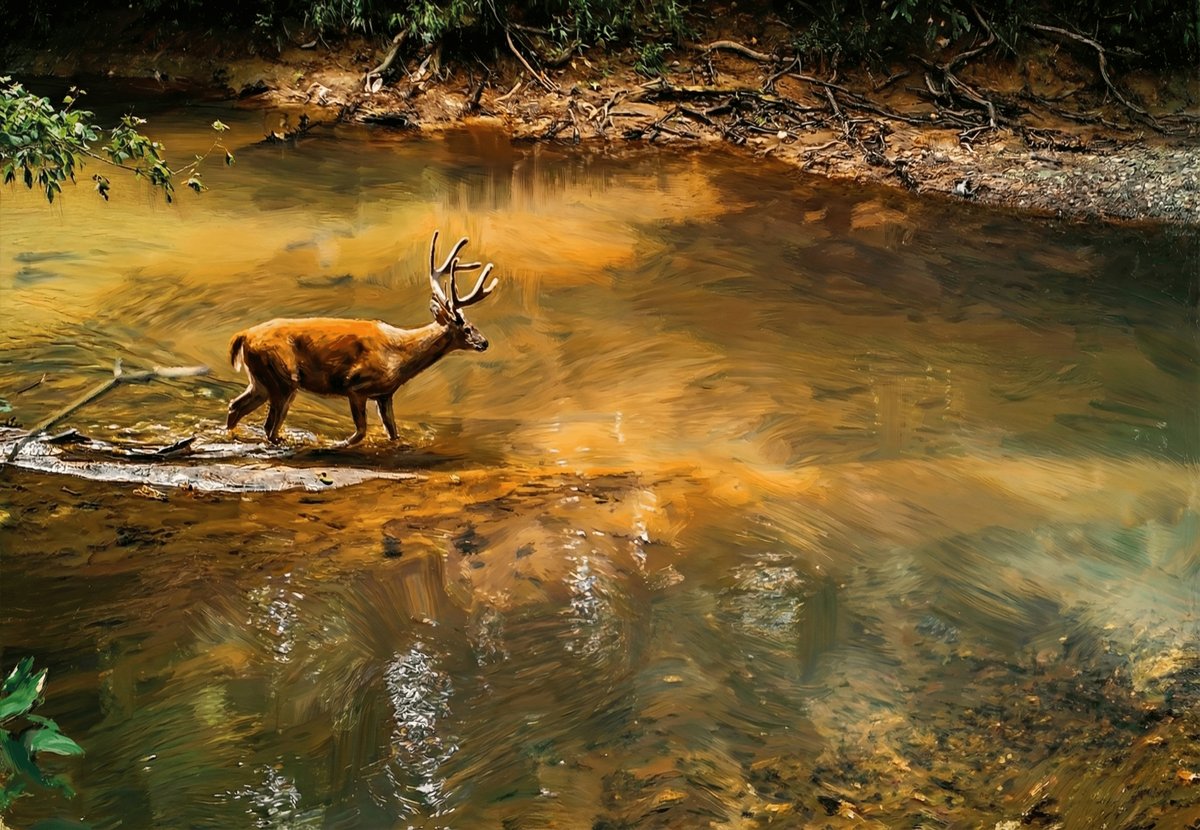
There’s a short window every year when the woods feel like they’re holding their breath—when velvet bucks slip through bean fields and cutovers like ghosts, antlers still soft, swollen, and alive with blood. Summer doesn’t have the pageantry of November, but it has its own kind of magic: long evenings, lazy thermals, and the quiet confidence of a buck that hasn’t been pressured yet. If you’ve ever glassed a bachelor group in the last hour of daylight and felt your chest tighten, you already know why velvet season gets under your skin.
At Field & Fen Art here in Milton, North Carolina, we’re drawn to those in-between moments—the ones hunters recognize instantly. Velvet is one of them. It’s not just “pre-season.” It’s a whole chapter of whitetail life that’s easy to miss if you’re only thinking about opening day.
Velvet bucks and what’s really happening on their head
Velvet isn’t just a fuzzy coating—it’s a living organ. Through spring and early summer, a buck’s antlers grow faster than any other bone tissue in the animal kingdom. That growth is powered by a dense network of blood vessels in the velvet skin, delivering calcium, phosphorus, and protein to the developing antler. When you look at a velvet rack up close, you can often see faint lines and dark shading where those vessels run, especially in good evening light.
That biology explains a lot about velvet buck behavior. In July and early August, those antlers are sensitive. Bucks are careful slipping through brushy edges and saplings because banging velvet can hurt. You’ll see them choose clean travel routes—mowed edges, logging roads, field corners—anything that keeps their headgear from snagging. When you find a “summer path” that looks like it was trimmed with hedge clippers, pay attention. It might be more about protecting velvet than about avoiding predators.
Then, as daylight shortens and testosterone ramps up late summer, the velvet begins to die. Blood flow shuts down. The antler calcifies and hardens. That’s when you’ll start seeing rubs appear—sometimes shockingly early—because the buck has to strip the velvet. They’ll use small saplings, cedars, even old fence posts. If you’ve ever found a shredded sweetgum in late August and wondered, “Already?”—that’s why.
Summer deer patterns: bachelor groups, water, and daylight movement
Summer deer can feel predictable, but there’s a reason they fool people every year. In early summer, bucks often run in bachelor groups, especially in areas with good groceries—soybeans, peanuts, alfalfa, lush clover, or even a buffet of forbs in a regrown clearcut. Those groups aren’t “friendships” so much as a truce. With low testosterone, there’s little reason to fight, and multiple sets of eyes make feeding safer.
Where hunters get tripped up is assuming that a buck patterned in July will be the same buck you hunt in October. Summer patterns are anchored to food and comfort. That means you’ll see consistent daylight movement near high-quality feeding and reliable water—creeks with shaded banks, stock ponds, and seeps tucked into hardwood bottoms. In North Carolina heat, bucks don’t just drink; they stage near water. A shaded ditch line or the cool edge of a beaver pond can be a midday reset spot, especially if the wind is steady and the understory is thick.
Watch their timing. Early in the season, you’ll often see velvet bucks step into fields with plenty of light left. As soon as pressure shows up—ATVs, bush hogs, a neighbor scouting too close—they’ll shift to the last five minutes or go fully nocturnal around that food source. The deer didn’t “leave.” They just changed how they use the place.
That quiet summer rhythm—bucks moving unhurried, ears swiveling, velvet catching the sunset—shows up in the mood of our whitetail pieces. If you want to wander through the full lineup, the Whitetail Deer Collection is where all those seasons live side by side.
Velvet buck scouting: glassing, trail cameras, and pressure you don’t feel
If you’re scouting velvet bucks, you’re really scouting habits: which field edges they trust, where they enter, and what wind they like. Summer is the best time of year to pick apart a buck’s routine—if you treat it like a bowhunt. Low impact matters, even when you’re “just running cameras.”
Glassing beats walking. Park where you can watch without silhouetting yourself, and let the evening settle. A good pair of binos and patience will tell you more than stomping into bedding cover. When you do hang cameras, place them on the approach to the food, not right on it. A camera 40 yards inside the timber on the main trail will inventory deer without teaching them that the field edge equals human scent.
And keep your wind honest. Summer air can be tricky—thermals dropping into creek bottoms at dusk, swirling around pine thickets, drifting down old logging roads like smoke. You can contaminate a spot without ever realizing it, especially if you’re sweaty and moving slow. If you want a buck to keep showing in daylight, treat your camera route like a stand access route: quick in, quick out, and only when the wind favors you.
One more detail that matters: velvet bucks often favor “easy living” terrain in summer—gentle slopes, open pine understories, shaded benches. But the moment velvet sheds and pecking order changes, they can shift. That’s why your summer intel is gold, but it’s not gospel. It’s a snapshot of a buck’s life before the woods get loud.
From velvet to hard horn: what changes when antlers harden
The transition from velvet to hard horn is when summer starts slipping toward fall, even if the air still feels like a wet towel. Once the velvet comes off, a buck’s posture changes. He carries his head differently. He walks like he owns the place. And those bachelor groups? They fracture.
You’ll start seeing subtle boundary-making—light sparring, short chases, and rub lines that look more like “I’m here” than true rut sign. Early rubs often pop up along travel corridors between bedding and feed, especially where a buck can work a sapling without exposing himself. Cedar, pine, and young hardwoods with thin bark are common targets, and the height of the rub can tell you a lot about his frame and how he angles his head.
This is also when your early-season setups either come together or fall apart. If you’ve got a food source that’s still attractive—acorns starting to drop, a green field that hasn’t been mowed into dirt—you can catch a buck on his feet before dark. But you’ve got to factor in his new attitude: he’s more reactive, more territorial, and less tolerant of mistakes. The same deer you watched calmly in velvet might now circle downwind of the field entrance before stepping out.
That shift is why we love hanging art that shows different phases of the season on the same wall. It’s a reminder that the buck you’re chasing isn’t a trail-cam photo—he’s an animal changing week by week.
Deer antler velvet art: keeping the quiet season on your wall
Velvet has a softness you can’t fake. The way light clings to it at sunset. The contrast between the dark summer coat and those pale, growing beams. It’s the same reason hunters take extra photos in July and August—because it looks unreal, like a dream version of a whitetail.
At Field & Fen Art, we lean into that feeling: the calm before the storm, the evenings when the woods smell like warm pine needles and fresh-cut hay. Our canvas prints are made for people who know what that hour feels like—who have sat on a tailgate with dusty boots, watching the last bit of daylight drain out of a field.
If your heart lives more in the fall chase, you might connect with the colder edge and heavier mood of Autumn Sentinel—that watchful, locked-in presence a mature deer carries when the woods start tightening up. For the full-throttle November mindset—the kind that tastes like frosty mornings and patience—there’s November Harvest, a piece that feels like the season you plan your year around.
And if you’re the kind of hunter who pays attention to where deer move as much as when they move, we’ve got scenes that speak your language. The Crossing captures that truth every experienced whitetail hunter learns: funnels aren’t just lines on a map—they’re lived-in pathways carved by hooves, habit, and wind. Pay The Toll leans into the same idea—a place where travel concentrates and the woods make deer commit.
Velvet season is brief, but it’s not small. It’s when you learn the cast of characters, watch a buck’s frame take shape, and feel the first real pull of the season ahead. If you want to keep that summer-to-fall story in front of you—on the wall where you’ll see it while you’re tying broadheads or checking maps—take a slow look through our Whitetail Deer Collection. No rush. Just good deer, good light, and the kind of moments you already know are worth holding onto.