 Field
Field 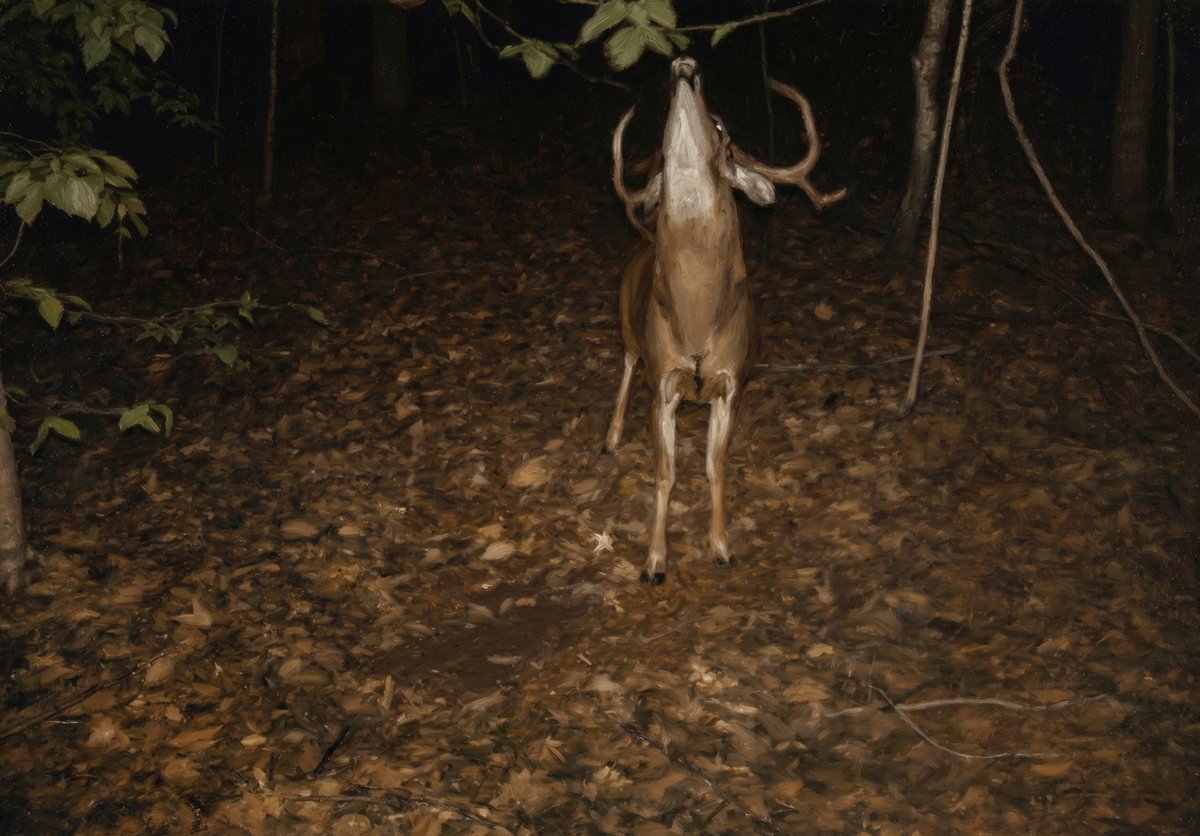
A scrape line is one of those things you don’t forget once you’ve seen it happen in real time: a string of raw, pawed dirt under overhanging limbs, each stop smelling like a whole different chapter of the rut. It’s also the kind of scene that makes deer scrape art hit a little harder—because you don’t just see a buck, you remember the chill in your fingers, the wind-check before daylight, and the question every hunter asks: “Is he working this line in daylight… or just after dark?”
At Field & Fen Art here in Milton, North Carolina, we’re drawn to those moments where wildlife behavior tells a story without words. A scrape isn’t random. It’s communication, timing, hierarchy, and habitat all scuffed into the soil. When you understand what a deer is saying at a scrape—and why he’s saying it there—you start reading the woods differently. And that makes both your hunts and your wall space feel more honest.
Deer Scrape Art: What a Scrape Line Really Means in the Rut
A scrape is a message board, not a feeding sign. When a buck opens one up, he isn’t looking for acorns—he’s establishing presence and checking who’s in the neighborhood. The physical scrape (pawed soil, urine, gland scent) is only half the story. The real “post” is usually the branch above it: the licking branch. That’s where the long-term scent and identity live.
Scrape lines form when multiple scrapes connect along a travel feature deer already prefer—field edges, logging roads, benches on a ridge, creek crossings, old fencerows, or the downwind side of doe bedding. During the pre-rut and rut, bucks make rounds. They don’t just wander; they patrol. A mature buck might hit several scrapes in one evening loop, pausing just long enough to freshen sign, sample scents, and move on. That’s why a scrape line can feel like a “route” when you find it—because it is.
Here’s the part hunters sometimes miss: the biggest scrapes aren’t always the best scrapes. A giant community scrape can be a nighttime hangout, especially if it’s exposed. Some of the most daylight-consistent scrapes are “satellite” scrapes tucked just inside cover, where a buck can scent-check without stepping into the open. If you’ve ever watched a buck stand 10 yards downwind of a scrape with his nose working overtime, you know exactly how careful they can be.
That subtle edge-of-cover tension is why pieces like Forest Floor Encounter resonate—there’s a grounded, close-quarters feel to it, like the woods are holding its breath. If you’ve hunted thick pines, cutovers, or creek-bottom tangles in the Carolinas, you know that “encounter distance” is often measured in steps, not yards.
Rut Behavior 101: Timing Scrapes, Wind, and Daylight Movement
Scrapes show up earlier than most folks expect. You’ll see “practice scrapes” pop in late summer and early fall, especially where bachelor groups are still relatively tolerant. But scrape activity that matters for rut behavior—consistent checking, intense reworking, daylight appearances—usually ramps up as days shorten and bucks shift from a food pattern to a breeding pattern.
In much of the Southeast, you’re not always dealing with a clean, one-size-fits-all rut window. North Carolina can vary by region, and local genetics plus doe cycling can stretch activity. Still, the pattern holds: pre-rut scrape checking increases as bucks start ranging wider and testing pecking order. Then, when chasing kicks in, scrape maintenance can actually dip because bucks are busy covering ground and dogging hot does. After the peak, scrapes can light back up again when bucks return to checking and searching, especially if late-cycling does are still coming in.
Wind matters more than scrape hunters sometimes admit. A buck doesn’t need to stand on a scrape to learn from it. He’ll often approach from downwind, cut the scent cone, and either move on or step in to work it. That’s why setting up on the scrape isn’t the same as setting up for the scrape. If your stand is where you can only shoot the scrape itself, you might be missing the real movement: the downwind swing 15–40 yards off, where a mature buck tries to confirm what his nose already suspects.
One of the best “tells” for daylight use is fresh, wet dirt plus newly broken debris in the scrape and a recently chewed or polished licking branch. If the scrape is dry, leaves are falling back in, and the branch looks untouched, it may be a nighttime post—or a scrape that was hot last week and is fading now. A trail camera can help, but your boots-on-the-ground read is still the fastest truth.
If you want an art piece that feels like that crisp November shift—when scrapes are fresh, deer are moving, and every hunt feels like it could happen fast—take a look at November Harvest. It carries that “this is the month” energy without having to explain itself.
Licking Branch Deer Art: The Real Center of the Scrape
If a scrape is the bulletin board, the licking branch is the signature line. Bucks mouth it, rub it with their forehead, and work it with preorbital glands. They’re leaving a personal ID and sampling everyone else’s. Does will use licking branches too—especially does nearing estrus—so a licking branch can become a crossroads of both sexes, not just a buck-only bragging post.
When you find a scrape, don’t just look down. Look up. The best licking branches are often about nose to forehead height for an adult buck, overhanging enough to be worked comfortably. In thick cover, you may find branches broken down and frayed from repeated use, with bark rubbed smooth where antlers or forehead glands have made contact. Sometimes you’ll even see a faint darkening or sheen on the branch where oils have built up.
In hunting terms, the licking branch is also a better “anchor” than the dirt. The ground scrape can be kicked fresh quickly, but that branch gets visited, tested, and re-scented over a longer period. If you’re hanging a camera, framing the licking branch is often the difference between a chest-only photo and a full buck with headgear and body language that tells you what he’s thinking.
In art terms, the licking branch is where the story lives too. A buck’s posture under a branch—neck extended, nose up, ears relaxed or pinned—shows mood and dominance in a way a simple side-profile can’t. That’s one reason we love showcasing whitetails with context: not just antlers, but behavior. If you’re drawn to that kind of narrative, you’ll find more of it in our Whitetail Deer Collection.
Reading a Scrape Line Like a Map: Funnels, Doe Bedding, and Pressure
A scrape line doesn’t exist in a vacuum. It forms where deer already want to travel—and where they can travel with some advantage. Start by asking three questions: What’s the cover? What’s the wind doing here? And where are the does spending daylight?
In many whitetail woods, the most reliable scrape lines show up on the downwind edge of doe bedding. A buck can cruise that edge, scent-checking for does without barging into the thick stuff and blowing the whole bedroom up. If you’ve ever watched a buck skirt a bedding area instead of walking straight through it, you’ve seen this strategy. He’s using his nose like a long-range radar.
Terrain and structure sharpen the pattern. In rolling country, scrape lines often follow a bench—an easy travel shelf on the side of a ridge—because deer can move efficiently while staying just below the skyline. In flatter piedmont or coastal ground, look for subtle funnels: narrow strips between a cutover and a creek, the tight corner where two timber types meet, or the inside edge of a field where cover pinches down. Even in a big woods setting, deer will choose the path of least resistance, especially during the rut when movement is constant and efficiency matters.
Hunting pressure is the wildcard. A scrape line that screams “daylight” in October can go dead quiet after a couple weekends of boots and ATVs. That doesn’t mean the deer left; it often means they shifted to the next parallel route in thicker cover, or they’re using the same line at a different time. Sometimes the best move isn’t to abandon the area—it’s to back off, adjust access, and hunt the downwind side where a mature buck still feels secure.
This is where your setup matters as much as your scouting. Quiet access that doesn’t cross the scrape line, a stand that covers the downwind swing, and an exit plan that doesn’t blow deer out of the bedding side—those details keep a scrape line “alive” for you instead of becoming another nighttime-only discovery.
From Frost to Driving Snow: How Weather Shapes Rut Behavior (and the Mood of the Woods)
Weather doesn’t create the rut—photoperiod drives breeding—but weather can absolutely shape how you experience rut behavior and how deer move within it. A sharp temperature drop often boosts daylight movement because deer are more comfortable covering ground. High winds can make the woods feel “nervy,” but bucks still cruise; they just rely on cover and may move tighter to edges that break the wind. After a heavy rain, scrapes can pop visually because the ground reads fresh and the scent story gets rewritten.
And then there’s snow. Even if you don’t see it often in central North Carolina, any time you hunt with snow on the ground—whether you’re traveling or you get that rare local dusting—everything changes. Tracks tell the truth. You can see the exact loop a buck made, which side of the trail he favored, where he paused to work a scrape, and how he used the wind. Snow turns rut behavior into a readable page.
That’s the feeling behind Driving Snow—a piece that captures how weather can compress the world into contrast and motion. In those conditions, you’re not just hunting an animal; you’re hunting a moment, because everything is visible and temporary at the same time.
When the woods are lit with late-season color—ember tones in leaves, low-angle sunlight, the kind of evening that makes you stay an extra ten minutes—you get a different mood. Bucks can still be moving, still checking scrapes, still making rounds, but it feels heavier, quieter. Embertrail Buck carries that late-fall atmosphere—the sense that something is about to step out, and you’d better already be ready.
Scrape lines are one of whitetail hunting’s best teachers. They show you how deer communicate, how bucks travel with purpose, and how the rut is less chaos than it looks from the stand. If you find yourself pausing over a fresh scrape—studying the track size, the direction of travel, the height of the licking branch—you’re already doing what good wildlife art does: paying attention to the details that turn a scene into a story.
If you want to keep that story close through the off-season, take a slow walk through our Whitetail Deer Collection. No rush—just see what feels like the woods you know.