 Field
Field 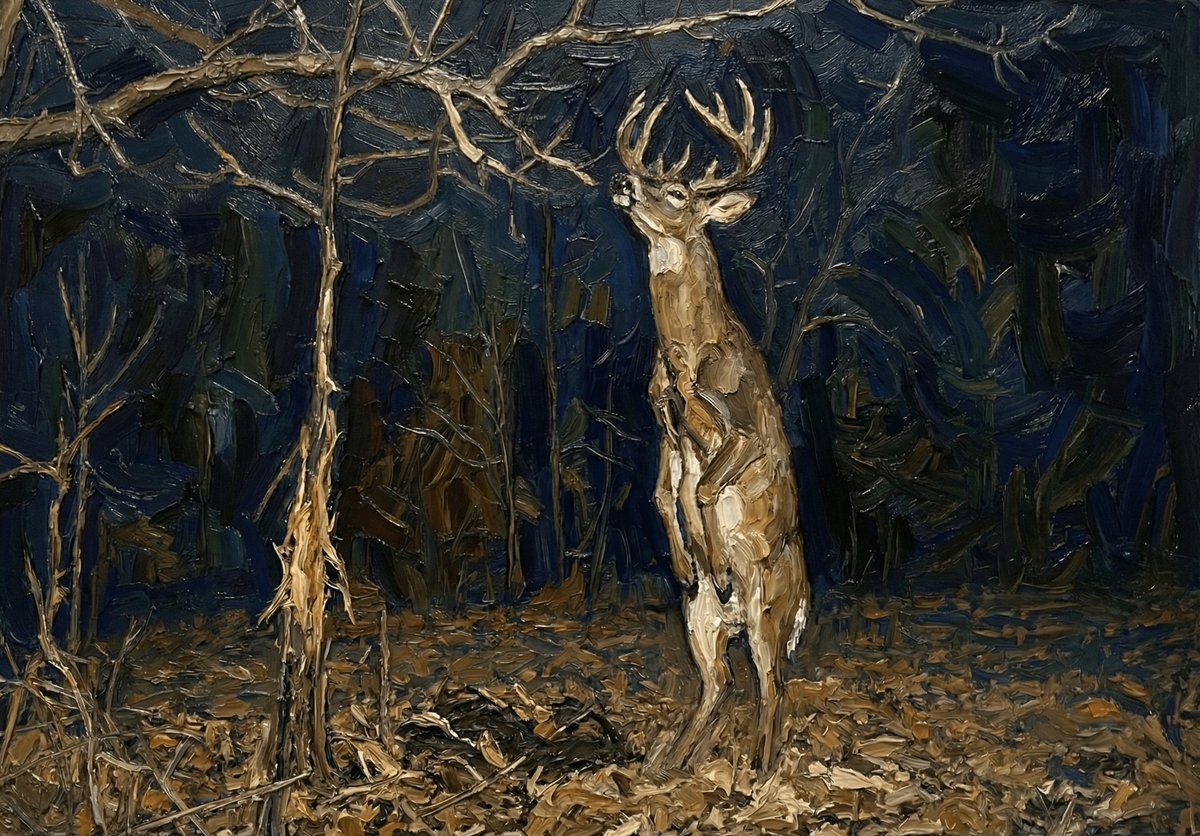
You’ve probably got a folder full of trail cam photos that mean more to you than any staged wildlife shot ever could. A clean 10-point slipping through at last light, a doe leading fawns past your scrape line, a heavy-bodied buck checking a pinch point after a cold front—those are earned moments. That’s why trail camera art hits different: it’s not just “a deer picture.” It’s the story of your season, your patience, your woodsmanship, and the little details you only notice when you’ve sat the same ridge and watched the same wind long enough.
At Field & Fen Art in Milton, North Carolina, we’re big believers that the best outdoor memories aren’t always the ones with a tag on the antlers. Sometimes it’s the night a buck finally showed in daylight, or the way a set of tracks cut across your logging road after the first hard rain. Those are trail camera moments worth framing—because they remind you why you scout, why you hunt, and why you keep coming back.
Trail camera art that captures more than antlers
The thing about trail cameras is they don’t lie. They catch deer being deer—nervy, cautious, routine-driven, and occasionally bold. That’s why a great trail-camera-style scene makes such powerful wall art. It holds the details you remember from real scouting: a buck’s head low as he scent-checks a scrape, the tension in his posture when he hits a swirl of human odor, the way his ears angle forward when he hears something that doesn’t belong.
If you’ve run cameras for long, you know body language tells you as much as rack size. A buck that’s relaxed—neck not fully swollen yet, tail loose, walking with a steady cadence—might be in early pre-rut mode, still predictable. But that same deer, later in October or early November, can look like a different animal: thick through the shoulders, brisk walk, eyes hard, nose working every step. Those are the moments you circle on the calendar, the ones that make you rethink stand access, wind direction, and how early you can slip in without bumping him.
That “earned” feeling is what you see in a piece like Harvest Sentinel. It has that watchful, on-edge presence—like the buck that didn’t get old by being careless. You know the type: he pauses just out of the shooting lane, checking the downwind side before he commits. Framing that kind of moment isn’t about bragging. It’s about honoring the chess match.
Trail cam photos that teach you how deer really move
The best trail cam photos aren’t just trophies—they’re lessons. If you’re paying attention, your camera card is basically a semester of Deer Movement 101. It’s where you learn what your bucks do on a calm evening versus a windy one, how does and fawns use cover, and where deer cross when pressure hits your neighbors’ properties.
One of the biggest tells in trail cam photos is timing. If a mature buck shows at 2:00 a.m. all week, he’s using that area—but he’s not comfortable there in daylight. That doesn’t mean you abandon it. It means you back up and find where he’s staging: the thick stuff 80 to 200 yards off the food source, the downwind side of a doe bedding point, or the first cover off a field corner where he can scent-check without exposing himself. If your photos shift from midnight to the last 20 minutes of legal light after a cold front, that’s not luck—that’s biology meeting weather. Cooler temps lower stress and increase movement, especially when acorns are dropping and deer are feeding hard to prep for rut.
Angle matters, too. A camera on a straight trail gives you confirmation that deer pass through. But a camera on a trail intersection or just off a scrape line shows you decision-making: which way they turn, whether they pause, and how long they linger. That pause is gold. It tells you where to hang a stand so you’re not trying to stop a moving target at 25 yards in crunchy leaves.
And don’t ignore the supporting cast. When you see a doe group showing up early, feeding relaxed, it often means the area feels safe. Mature bucks may not be far—especially if you’re near thick bedding cover. When your doe photos suddenly get jumpy—heads up, looking into cover, showing up later than normal—that can be a sign of pressure, predators, or a change in wind patterns that’s making them uneasy.
A scene like The Crossing captures that exact “movement corridor” feeling—the kind of place you learn from trail cams: a natural funnel where deer prefer to travel because it’s efficient and safe. Creeks, ditches, old fence lines, and timber edges all create crossings like that. When you find one that’s active year after year, you’re not just finding deer—you’re finding tradition.
Deer scouting art inspired by scrapes, rubs, and staging areas
If your trail cam photos are telling the truth, scrapes and rubs are telling you why. You already know not every scrape is worth hunting. Some are just community signposts that light up at night. But when you get a scrape that’s worked in daylight—especially on the downwind edge of doe bedding or near a terrain feature that forces movement—you’re looking at a potential rut-time anchor point.
Here’s a pattern you’ve probably seen: early season, bucks hit scrapes inconsistently, more like practice. Then pre-rut ramps up, and suddenly that same scrape becomes a nightly check-in. The real magic is when the camera catches a buck coming in downwind, looping, testing scent before stepping into the open. That tells you exactly where not to place your stand if you don’t want him to bust you. Instead, you set up to cover his approach, not the scrape itself.
Rubs tell a parallel story. A random rub on a field edge might be a young buck burning energy. But a rub line that runs parallel to a ridge, especially on the leeward side where deer bed with wind advantage, often indicates a travel route tied to security cover. If your trail cam photos show a mature buck using that route, you’re seeing a bedding-to-feed path or a staging loop—something repeatable, not random.
Forest Floor Encounter carries that close-to-the-ground, in-the-sign feeling—like you’re right there among the leaves and shadows where rubs pop and tracks tell the day’s news. It’s the kind of piece that reminds you scouting isn’t just walking—it’s reading. You notice the sharp edges of a fresh track after rain, the way acorn caps are scattered under white oaks, the faint musky smell where a buck worked a licking branch.
Trail camera art and the quiet stories you didn’t plan for
Some of the best trail camera moments have nothing to do with antlers. You know the ones: a bobcat ghosting through at noon like it owns the place, a gray fox with a mouse in its mouth, a flock of turkeys doing turkey things, or a bear that suddenly changes your whole “where should I hang this stand” plan.
Those surprises are part of what makes running cameras addictive. You’re not just collecting deer intel—you’re watching a living system. And the longer you watch, the more you understand how everything overlaps. Coyotes showing up on the same trail as your doe group might explain why deer hit that plot later. A hawk frequenting an opening can change squirrel behavior, and suddenly your “quiet” morning sit gets louder. Even weather shows up in your photos: muddy coats after a warm rain, stiff-legged movement after a hard freeze, deer favoring south-facing slopes when winter bites.
There’s also something special about vertical space in the woods—how deer live in the understory while the forest towers above them. Big timber has a way of making you feel small in a good way. Forest Ascendant leans into that feeling: the upward pull of trunks and canopy, the sense that every step in the woods is part of something older and bigger than one season. It’s a reminder that scouting isn’t just a task—it’s time spent in a place that shapes you.
From trail cam photos to a wall you’ll actually stare at
Let’s be honest: most trail cam photos aren’t “frame-ready” in the traditional sense. They’re grainy, timestamped, and lit like a convenience store parking lot. But they’re priceless because of what they represent. The goal of deer scouting art isn’t to pretend your camera takes gallery shots—it’s to capture the spirit of those moments in a way that fits your home, camp, or office without losing the grit and authenticity that makes them yours.
Think about which images you go back to every year. Is it the first velvet buck of summer? The doe and fawn pair that made your place feel alive? The rut photo where a buck’s neck looks like a bulldozer and you can practically hear him grunting? That’s the moment worth translating into art—because it brings you right back to the smell of damp leaves, the sting of cold air in your lungs, and the quiet confidence of having done your homework.
If whitetails are your north star, start with the Whitetail Deer Collection. Take your time and look for the scene that matches what you know: the posture, the habitat, the mood. You’ll find pieces like Harvest Sentinel, The Crossing, Forest Floor Encounter, and Forest Ascendant—each one built around the same truth your trail cam teaches you: the woods are full of stories, and the best ones are the ones you’ve lived.
When you’re ready, pour a cup of coffee, think about the moments that made your season, and browse the Whitetail Deer Collection to find the one that feels like home.