 Field
Field 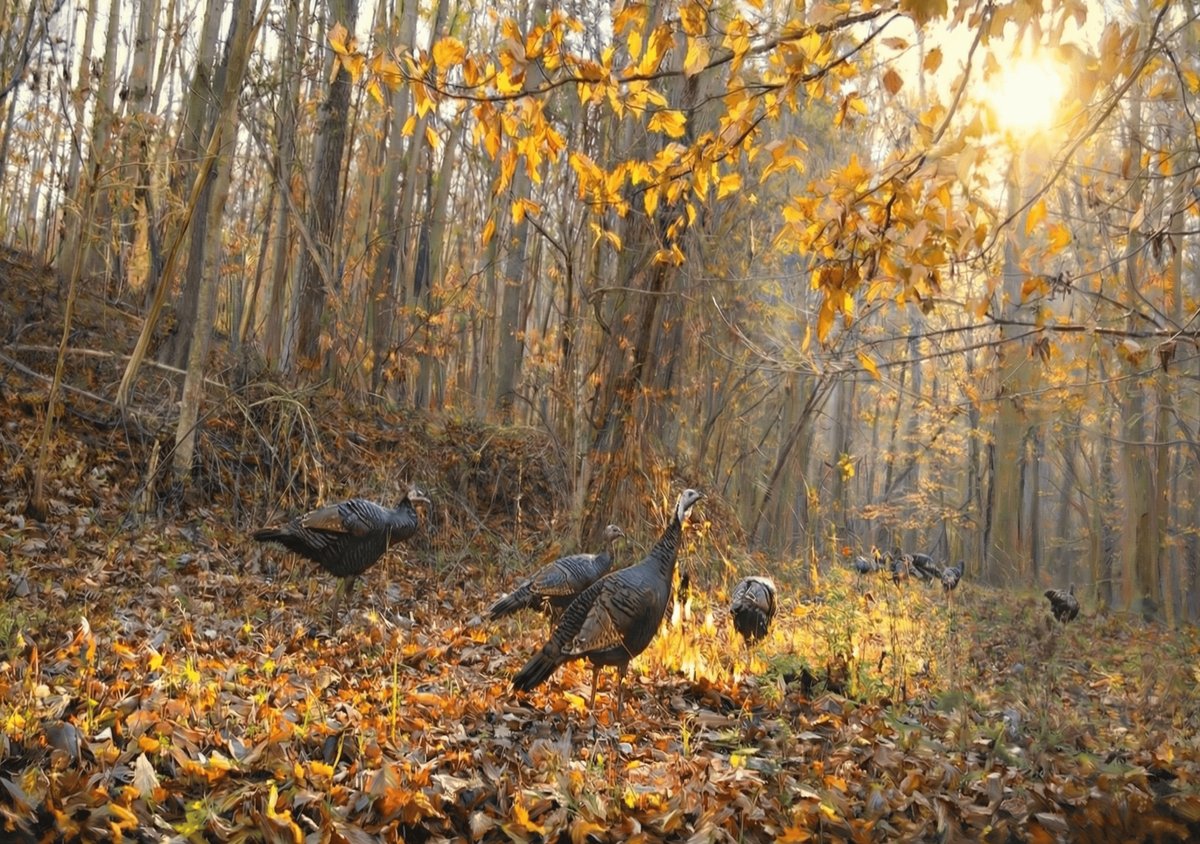
There’s a certain kind of restlessness that shows up right before turkey season. You start hearing gobbles in your sleep, your truck seems to drift toward the backroads on its own, and you catch yourself glassing open fields “just to see what’s there.” If you’re like me, turkey hunting art scratches that itch when you can’t be in the woods—something you can look at over coffee while you’re tightening gear lists and replaying last spring’s close calls.
Down here around Milton, North Carolina, spring comes with a soundtrack: peepers in the low spots, songbirds cranking up at first light, and that first sharp gobble that snaps you wide awake even before your alarm. It’s the most addictive season we’ve got. And it’s also the one that rewards the little details—how turkeys use terrain, why they pick certain strut zones, and what changes when hens hit the nest. The right print on the wall doesn’t just look good; it keeps your mind in that world where the next setup is always one ridge away.
Turkey Season Mindset: Reading Birds Like You Read a Map
The best prep isn’t a new call or another box of shells. It’s sharpening how you think about turkeys. Early season, toms are loud because they’re advertising—trying to round up hens and establish status. That doesn’t mean they’re easy. A gobbler that hammers on the limb can still pitch down, hit the ground running, and be a quarter-mile away before you’ve even found a tree to lean against.
Start by locking in a few consistent truths about wild turkey behavior:
Roosting is about safety and visibility. In our part of the Piedmont, birds like mature trees along creek bottoms or edges where they can see danger coming. They’ll often roost on the downwind side of a ridge so they can hear and smell what’s below. When you locate a roost, don’t treat it like a bullseye—treat it like a compass heading. You’re learning a pattern, not trying to sit under a bird.
Fly-down isn’t random. Most gobblers pitch down toward the direction they want to travel—often toward open timber, a field edge, or a logging road that gives them visibility. If you can predict that first 200 yards of movement, you’ll beat the guy who sets up “close” but on the wrong side of the show.
Strut zones are real places. A tom doesn’t strut everywhere; he struts where he can be seen. Think old pastures, open hardwood ridges, shady edges of food plots, and the shoulders of logging decks. If you’re scouting, look for drag marks, tracks in soft dirt, and feathers where birds have been loafing. That’s your stage.
This is where art intersects with hunting in a way that feels honest. A strong turkey image isn’t just a bird portrait—it’s a snapshot of a moment you recognize: that posture, that tension, that “any second now” atmosphere.
Wild Turkey Prints That Capture Spring Behavior (Not Just Feathers)
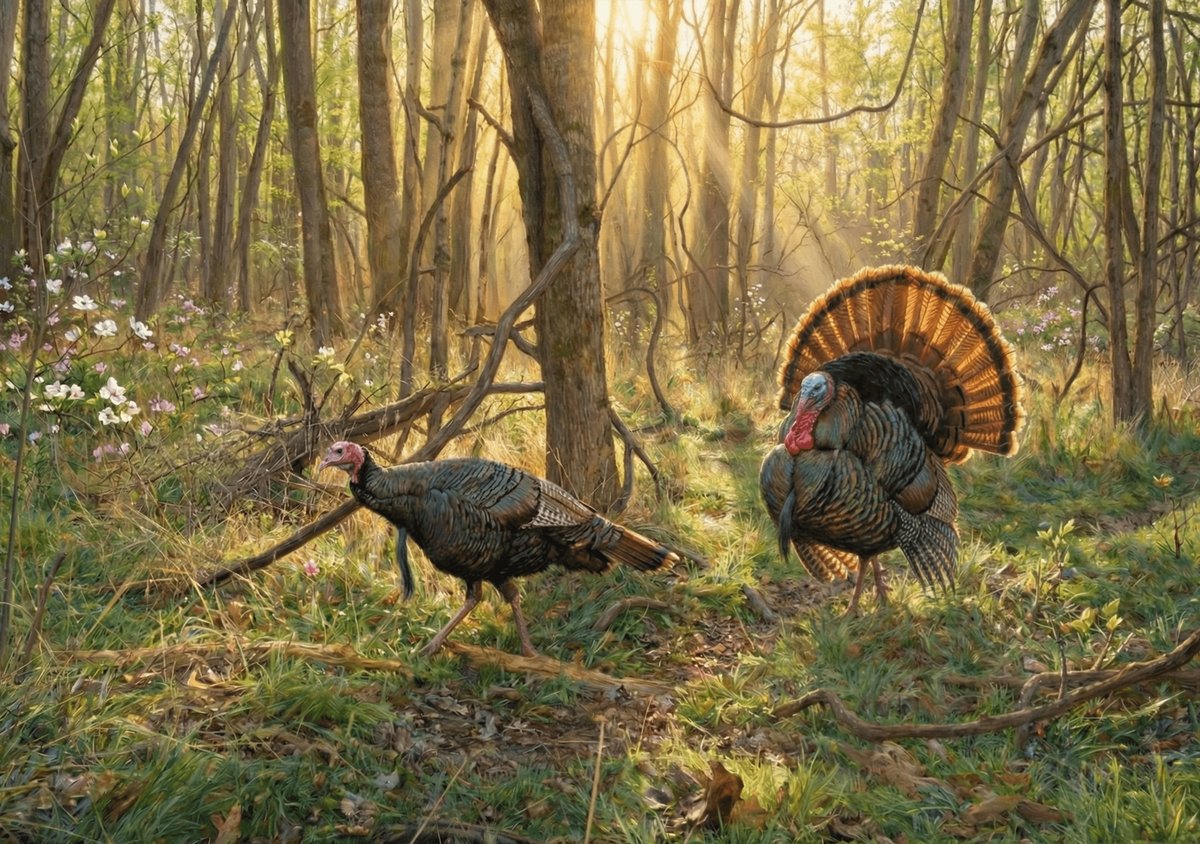
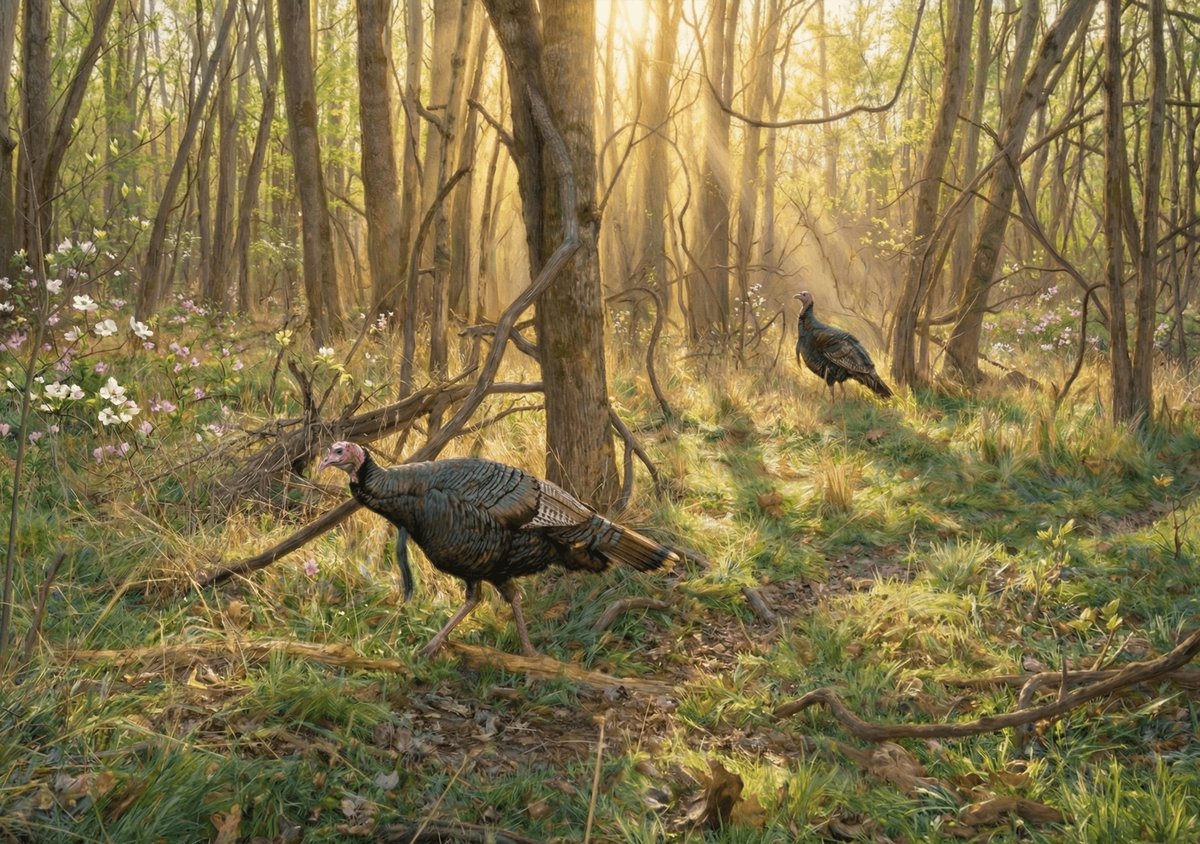
Good wild turkey prints make you feel the season: damp leaves under your boots, the thin gray light right before sunrise, and the sudden shock of motion when a bird steps into view. That’s what I like about Field & Fen Art—these pieces don’t feel staged. They feel observed.
If you’ve spent time around turkeys, you know the smallest visual cues matter. A gobbler’s head color can shift with mood—brighter reds and whites when he’s fired up, more muted tones when he’s cautious. Wing drag marks show confidence. A tight, forward-leaning posture can signal a bird that’s about to commit—or one that’s about to leave.
That’s why a print that shows posture and context hits harder than one that’s just “pretty.” It mirrors what you’re looking for in the woods: not perfection, but truth. If you want to see a lineup of pieces that stay rooted in real spring moments, Field & Fen’s Wild Turkey Collection is worth a slow browse—like you’re easing along a field edge with your head on a swivel.
Turkey Hunting Art for the Early Season: Roost Talk, Fly-Down, and First Light
Early season is when you can still lean on sound—if you handle it right. A dawn gobble on the limb is a gift, but it can also make you rush. The move is to set up where the bird wants to be after fly-down, not where he’s sleeping. If he’s roosted over a creek bottom, that might mean sliding up onto the first open ridge, or tucking into a transition where hardwoods meet a thin pine edge.
Calling early can be surprisingly simple: a few soft tree yelps, maybe a fly-down cackle, then let the woods breathe. If you hammer a roosted bird and he has hens around him, you’re often just letting him know exactly where not to go. Real hens don’t usually scream all morning from one spot. They move, they feed, they scratch, they pause. Your calling should feel like that—alive, not desperate.
That “first light” vibe—when you’re still in the dark, listening for the next gobble—is why Morning Breakfast belongs in a turkey hunter’s space. It carries that grounded, early-day energy that makes you want to check your watch and whisper, “Any minute.” Put it where you drink your coffee or lay out your vest and calls. It’s a reminder that the best part of spring sometimes happens before the sun even clears the trees.
Spring Dispute and the Reality of Dominance: How Toms Compete in Turkey Season
If you’ve ever watched two longbeards posture up, you know it’s not always a full brawl—but it’s never nothing. Toms are constantly measuring each other: who owns the strut zone, who gets the hens, who gets to gobble without consequences. Even subtle dominance displays—cutting another bird off, staying higher on a ridge, holding a tighter strut circle—can dictate how the whole morning plays out.
This matters for hunting because it changes what calls will work. When you hear multiple gobblers, you’re listening to a social problem. A boss tom might gobble less once he’s with hens because he doesn’t need to advertise. A satellite bird might gobble more because he’s trying to steal attention. That’s where the “fight” sounds—like a gobbler yelp or even aggressive cutting—can sometimes flip a switch, especially later in the morning when hens drift off to nest and a tom’s confidence starts to wobble.
But don’t forget the visual side: real disputes often happen in open places. A tom wants an audience. If you’re trying to intercept a dominance-minded bird, set up where he can approach with visibility—inside the timber but near an opening, or on a ridge that lets him look downhill. If he has to walk into a blind pocket with no sight lines, he may hang up and drum from 60 yards, waiting for the “hen” to show herself.
Spring Dispute nails that charged moment when the air feels tight and anything can happen. It’s a piece that makes you think about pressure, pecking order, and why certain setups work best when you’re dealing with multiple birds that don’t want to share.
Ringside Seat: Setting Up on Strut Zones, Edges, and the Places Turkeys Want to Be Seen
There’s a reason old-timers talk about “where they like to strut” like it’s a permanent landmark. A good strut zone is part visibility, part habit, part safety. Turkeys love edges—field lines, thinning borders, the open side of a creek bottom—because edges let them see danger and see each other. In many Carolina properties, that means the boundary between mixed hardwoods and a cutover, or a pasture finger that meets a shaded ridge.
If you’re prepping for turkey season, put boots on the ground and look for three things in potential strut areas:
Sign in the dirt. Tracks that look fresh, wing drag marks, and droppings clustered in one open area are all hints that you’re near a daily stage.
Comfort cover nearby. Toms will strut in the open, but they like having timber or brush close enough to slip into if something feels off.
Approach routes. Birds often use the same trails along ridges and benches. If you can set up where two routes merge—like where a logging road crosses a saddle—you can catch a bird moving between zones without having to call him across open ground.
This is exactly the kind of scene that makes a hunter’s pulse jump: you’re set up, you can see a lane, and you know you’re in the right place—you just need a bird to do what birds do. Ringside Seat feels like that. It’s the perspective of being close enough to hear the drumming, close enough to notice the feather tips trembling, while still being tucked back where you belong.
And one more truth: as the season progresses, the game shifts. Mid-to-late season, hens start spending more time on nests, and gobblers can become more responsive later in the morning—10 a.m. to early afternoon—when they’re suddenly alone and looking. If you’ve got a strut zone near nesting cover (thick field edges, briar patches, young pines), that’s a prime place to sit longer than your patience wants to.
If you’re the type who counts down days on the calendar and replays every hunt like film, having the season around you doesn’t hurt. Not in a loud way—more like a steady reminder of why you’re tying new knots in your face mask and checking your decoys for leaks.
When you’ve got a minute, take a look through Field & Fen Art’s Wild Turkey Collection. Scroll slow, like you’re easing down a logging road at daylight. You might find a scene that feels like your home woods—and keeps the obsession fed until the next gobble.