 Field
Field 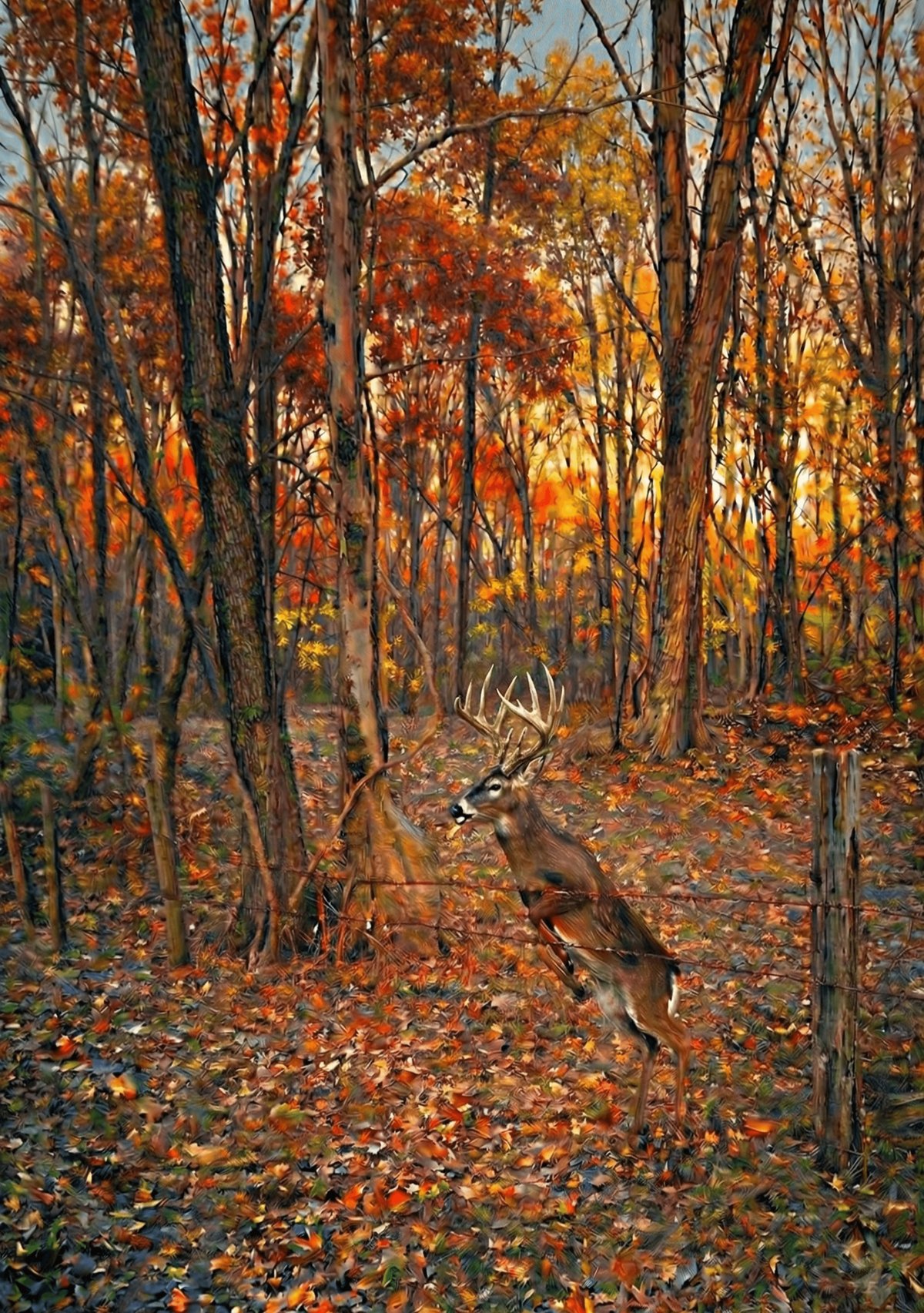
Good deer art doesn’t just show antlers and a brown hide—it captures whitetail deer behavior the same way you remember it from a cold stand: the pause before a buck commits, the sideways glance into cover, the stiff-legged posture that says, “I’m not sure about this.” That’s the stuff every hunter recognizes instantly, because you’ve watched it play out in real time—often in the exact seconds that decide whether you notch a tag or eat humble pie. The best wildlife pieces freeze those tells and let you study them long after the season ends.
At Field & Fen Art here in Milton, North Carolina, we’re obsessed with that moment where woods sense meets brushstroke—when you can look at a canvas and feel the air, the wind direction, and the tension in a deer’s body. In this post, we’re digging into the behaviors hunters read without thinking, and why they matter so much in deer art and deer hunting art.
Whitetail deer behavior hunters read at a glance
You can learn a lot from a whitetail’s posture before you ever see its rack clearly. Hunters talk about “body language,” but it’s more like a whole vocabulary—ears, tail, head angle, and foot placement all saying something different. When an artist gets those details right, you don’t just see a deer—you recognize a situation.
Ears are the first giveaway. Relaxed deer rotate their ears like satellite dishes, sampling the woods. A buck that pins one ear forward and one back is actively triangulating sound—usually because something didn’t match the normal soundtrack of the timber. If you’ve ever drawn your bow while a doe stared holes through a thicket, you know that ear set: not full alarm, but no longer casual.
Head position tells you what they’re prioritizing. A feeding deer drops its head and commits to it. A cautious deer “bobs” its head slightly as it studies contrast and motion. That little bob isn’t random—it’s depth perception at work, trying to turn a flat wall of saplings into information. In art, a subtle head tilt can capture that exact “I’m deciding” moment that makes your heart thump against a safety harness.
Feet matter more than most folks think. A deer that’s about to bolt often shifts weight back, loading the rear legs. The front hoof might be slightly lifted—frozen mid-step—because it’s ready to snap into motion. Artists who catch that suspended step aren’t just painting anatomy; they’re painting intent. It’s the difference between a calm woodland scene and a high-stakes encounter.
If you enjoy studying that language, the Whitetail Deer Collection is built around those recognizable, hunter-earned moments—where behavior is the whole story, not just decoration.
Rut behavior in deer art: dominance, posture, and “the look”
The rut isn’t just chaos—it’s a set of rules that whitetails follow hard, and you can see those rules written on a buck’s body. During peak breeding, a mature buck carries himself differently: neck swollen, brisket deeper, head held lower like a brawler who knows he belongs in the ring. That posture is dominance long before antlers touch.
Stiff-legged walking is one of the clearest rut tells. A buck that’s feeling himself will move like the ground owes him something—slow, deliberate, legs straighter than normal. When you see it in the woods, it’s usually paired with a side-on presentation: he wants the other buck (and any nearby doe) to see size. In a painting, that same stance creates tension even if the scene is quiet—your brain knows what comes next.
The sideways glare and quartering stance show up right before a fight or a hard push. Bucks don’t always crash together immediately. Often there’s a posturing phase: ears back, head slightly angled, eyes locked, and that subtle lean forward that says he’s measuring distance. This is where great deer hunting art hits home—because you’ve watched it through limbs and briars, trying to decide if you can reposition without being seen.
That pre-contact tension is exactly what Autumn Standoff captures—two bucks in that razor-thin moment where dominance is being negotiated. It’s a scene every whitetail hunter understands: the woods feel suddenly smaller, quieter, like everything’s holding its breath.
And if you’ve ever rattled and had a buck come in bristled up, you know the other side of rut behavior too: sometimes they don’t posture much at all. Sometimes they come fast, direct, and hot—because another buck is already on “their” doe. That urgency is real, and it’s why rut scenes in art can feel like action even when nothing is blurred.
Deer behavior in the woods: feeding, bedding, and edge travel
Outside the rut, whitetails are masters of efficiency—especially pressured deer. They don’t waste daylight movement unless food, security, or the wind gives them a reason. When you start noticing the patterns, you’ll see why certain art scenes feel “true” while others feel like a generic deer dropped into generic trees.
Feeding behavior changes with pressure. Early season deer will often feed more openly, especially in soybeans, clover, or soft mast areas where they can see and hear well. As pressure stacks up, feeding becomes more edge-focused: inside corners of fields, shaded transitions, and short “staging” movements just inside the timber before dark. In art, that might look like a buck half-covered by saplings, not out in the open—and that’s a detail hunters recognize immediately.
Bedding is about wind and visibility, not comfort. A mature buck typically wants wind covering his back and eyes covering the downwind or downhill approach—especially on points, ridge spines, or thick cutovers where he can slip out without being seen. In swamp edges and river bottoms, it’s often the thickest nastiness available with a nearby escape route. If your favorite stand overlooks a transition line where thick meets open, you already know why deer love those spots: they can feed and vanish with a couple bounds.
Edge travel is the whitetail’s default highway. They’ll skirt the downwind side of cover, using brush lines, creek bottoms, and old logging roads not because it’s easier, but because it’s safer. That’s why you see so many trails etched into the same 20-yard band along a field edge or ridge contour. A good piece of deer art often shows that “edge life”—the deer isn’t centered like a portrait; it’s moving along cover like it belongs there.
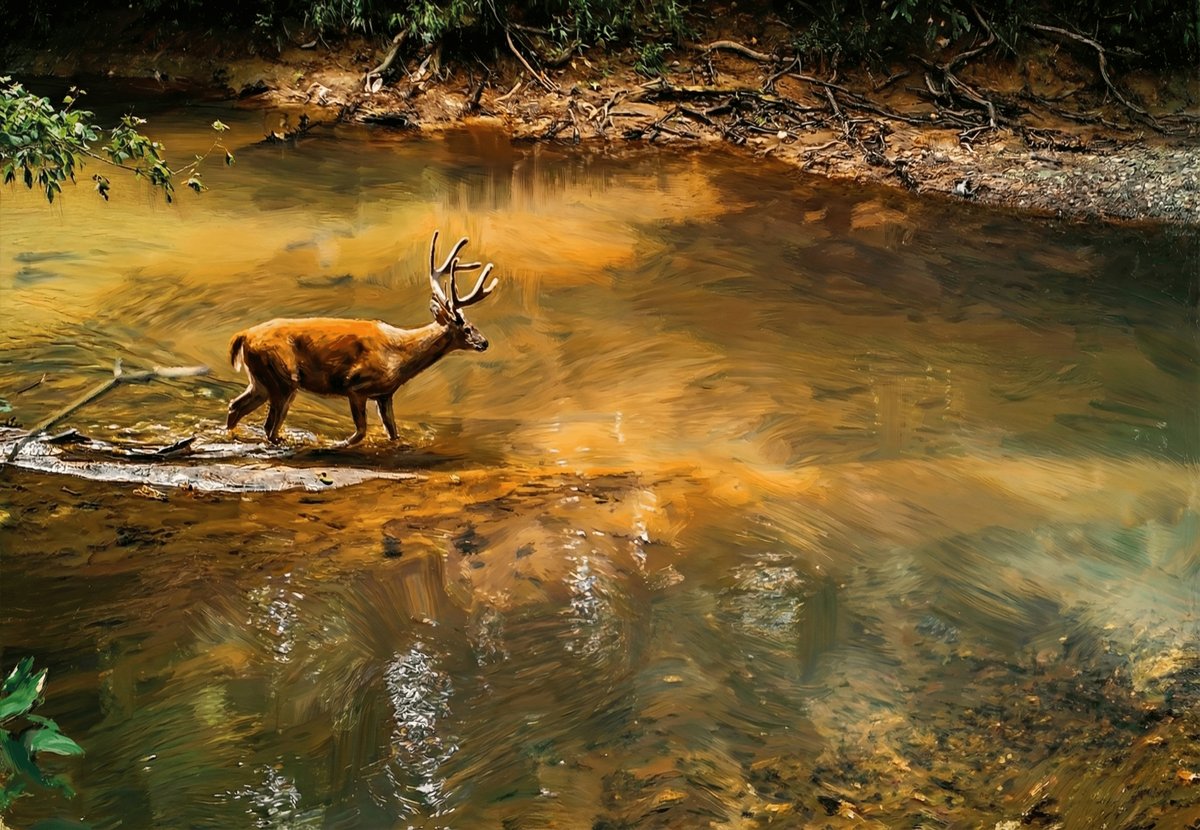
If you’re drawn to scenes that feel like daylight movement—controlled, confident, and woods-smart—take a look at Forest Ascendant. It has that sense of a buck using the timber the way mature deer do: not wandering, but traveling with purpose, owning his line through the woods.
Antlers, sign, and the story behind deer hunting art
Antlers are the obvious headline, but for hunters they’re also a timeline. You can look at a rack and remember the summer glassing, the first velvet pictures on camera, the shift into hard-horn, and that one scrape line that suddenly lit up. When deer art leans into those details, it becomes more than a picture—it becomes a memory trigger.
Velvet tells you about the phase of the year. A velvet buck often moves with a different kind of confidence—still social, still patterned, still tied to summer food. You can almost feel the warmth in those scenes. Once the velvet’s shed, everything sharpens: the attitude, the movement, the way bucks hold their heads and test the wind before stepping out. An artist can suggest that seasonal shift with light alone—golden early season glow versus the cooler, harder feel of late October timber.
Rubs and scrapes are communication, not just “sign.” A rub line can show direction of travel and which side of a trail a buck prefers. Scrapes aren’t only about the dirt—they’re about the licking branch, the scent gland routine, and the way a buck works it with his forehead and preorbital glands. If you’ve sat over a primary scrape and watched the show, you know it’s never random. In art, even the suggestion of broken saplings or a scuffed patch beneath a low limb can make the scene feel like it’s happening in a real place.
Character in antlers is character in the deer. Heavy bases, stickers, uneven tines—those quirks make you lean in, the same way you do when you scroll trail cam photos and zoom way too far. If you like bold, modern whitetail pieces that celebrate that antler personality, Drippy Tines leans into the rack as the main event without losing the wildness behind it.
And sometimes you want a buck that just looks like the kind you daydream about in July and lose sleep over in November—tall, clean, and lit like a page out of your best season. Golden Boy has that warm, high-country-of-the-South feel—like the last light in a hardwood stand when everything goes honey-colored and you’re begging the wind to hold steady.
Why realistic whitetail deer behavior makes deer art feel “alive”
Hunters don’t fall for fake woods. You can spot it instantly: the wrong posture, the wrong angle, the wrong mood. Real whitetail behavior carries a certain tension even in calm moments, because prey animals are never fully off duty. That’s what the best deer hunting art captures—the constant evaluation happening behind a deer’s eyes.
Light and wind are part of the story. The way a deer stands on the edge of shade, the way it angles its nose into a breeze, the way it pauses before crossing an opening—those are survival habits. When you see them represented well in art, it pulls you back to your own sits: the frosty mornings when sound carries forever, the damp afternoons when the wind swirls, the still evenings when every footstep feels too loud.
True-to-life scenes honor the hunt without staging it. Not every moment needs blood or a trophy grip to feel meaningful. Sometimes the best part of a season is the encounter you didn’t capitalize on—the doe that busted you and blew, the buck that circled just out of range, the fight you heard but never saw. Art that’s grounded in behavior lets you keep those moments too, not just the tagged ones.
If you want to see more pieces built around those authentic, hunter-recognized details, spend a little time with Field & Fen Art’s Whitetail Deer Collection. No pressure—just a good place to browse when you feel like bringing a bit of the rut, the timber, and the whitetail’s wild instincts into your own walls.