 Field
Field 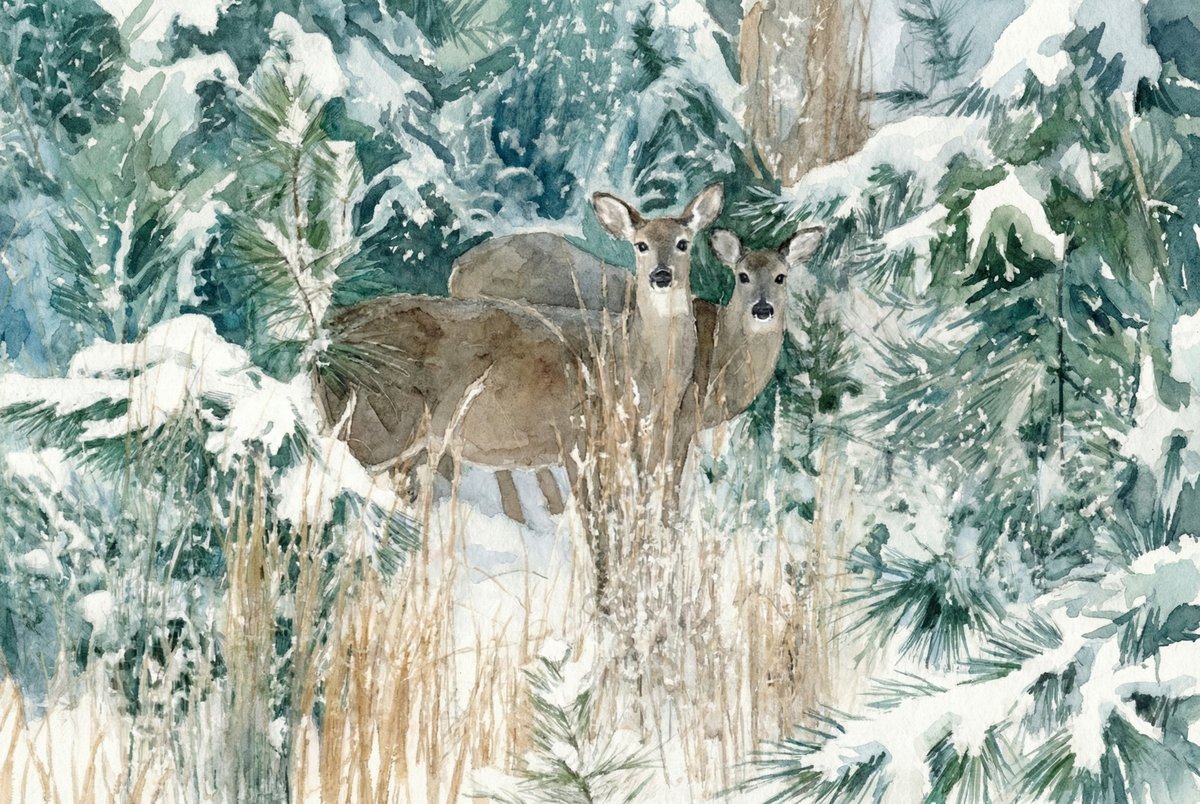
There’s a reason winter wildlife art hits different than any other season. In cold weather, the woods simplify. Tracks tell the truth. Sound carries. Animals move with purpose, and the landscape strips itself down to line, shadow, and contrast—exactly the kind of clarity that makes a canvas print feel like a window instead of decoration. If you’ve ever stepped out before daylight with snow squeaking under your boots and watched a ridge wake up in slow motion, you already know why winter scenes belong on your walls.
At Field & Fen Art in Milton, North Carolina, we’re drawn to that honest, hard-edged beauty: the kind you’ve earned by getting your hands cold and your lungs full of clean air. Winter isn’t just “pretty.” It’s revealing. And that’s why the right winter print doesn’t just match your room—it matches your memories.
Winter wildlife art is about survival—and you can see it in every detail
In winter, animals don’t waste motion. Deer aren’t out browsing for variety; they’re prioritizing calories and minimizing exposure. You’ll see them stage in cover longer, then move with purpose to the best remaining food: standing corn, soybean stubble, browse lines on greenbrier, honeysuckle, or the last acorns tucked into south-facing slopes that hold heat. If you hunt whitetails, you’ve watched that shift happen. Snow and cold don’t just change where deer feed—they change when they feel safe enough to move.
That’s what makes winter scenes so powerful as art: every pose implies a decision. A buck angled into the wind isn’t just “posed nicely”—he’s using his nose. A doe tucked tight to a cedar edge isn’t being shy—she’s cutting wind and conserving body heat. Even birds broadcast winter logic. Small songbirds puff up to trap air in their feathers, turning themselves into living insulation. Ruffed grouse dive into powdery snow to roost, using it like a blanket. When you know these behaviors, winter artwork stops being a generic snow picture and starts feeling like a story you can read.
If you want a piece that captures that tight, living energy—wildlife leaning into the season—take a look at Frostbound Companions. It’s the kind of scene that reminds you how animals don’t “endure” winter so much as work it, minute by minute.
Winter wall art uses contrast like a good hunter uses wind
Snow scenes are built on contrast: dark timber against a white field, a tawny hide against a pale creek edge, crow-black branches cutting across a gray sky. The season does half the composition for the artist. And if you’ve spent time glassing winter cover, you’ve trained your eyes to love those contrasts. You’re already wired to pick out ear tips in a brush line, a horizontal back in vertical saplings, or the subtle “wrongness” of a shape that doesn’t belong.
That’s also why winter wall art works in a home. In a room, contrast adds depth without clutter. A winter print gives you clean negative space—snow, sky, frost—so the wildlife and landscape read from across the room. It’s the same way a fresh snow makes the woods feel bigger: fewer distractions, more meaning.
There’s another layer here that hunters appreciate: winter contrast is honest. In early season, leaf-on timber hides a lot. In winter, you can see what’s really there. Beds show up in grass. Trails stand out as packed lines. Rubs and scrapes are easier to read when you’re not fighting green vegetation. Even old fence lines and forgotten lanes reappear once the understory drops. That “truth-telling” feel is part of what makes winter art so satisfying—no fluff, just the land as it is.
If you like artwork that feels like you just crested a rise and found an old, familiar view, The Old Place carries that kind of quiet contrast. It’s the visual equivalent of exhaling in cold air and watching it hang there a moment.
Snow scenes teach you to read sign—tracks, trails, and the story of the night
Fresh snow is a field notebook. Even folks who don’t hunt can feel the magic of it, but you know the real value: snow turns invisible movement into readable sign. A set of deer tracks crossing a two-track isn’t just “deer were here.” Track size, stride length, and the way toes splay in soft snow can hint at speed, weight, and even fatigue. A sharp-edged track was made recently; a wind-softened one might be from hours ago. A meandering line with frequent pauses suggests feeding. A direct, straight line with long strides says “travel” and often points to bedding cover.
Predator sign gets even more interesting. Coyotes tend to move with purpose—often in a straight line, conserving energy—while domestic dogs wander and loop. Fox tracks can show that tidy, almost delicate gait, and you’ll sometimes see where they pounced, leaving a burst of churned snow and a tail mark. Rabbits and squirrels scribble the margins. Turkeys leave those unmistakable three-toed prints and drag marks when snow is deeper. Even if you’re not out there with a tag, reading those stories is part of being an outdoorsman.
Winter artwork that includes tracks and travel corridors pulls you right into that mindset. You don’t just look at the animal—you look for where it came from and where it’s going. That’s why the right snow scenes make such good wall art: they invite you to participate, to “hunt” the image the way you hunt a hillside.
For a piece that feels like a moment on a cold crossing—where movement and landscape meet—check out Pay The Toll. It has that sense of passage, like something is headed somewhere for a reason, and you’re lucky enough to catch the instant.
Why winter wildlife art feels calmer (even when the weather’s rough)
There’s a quietness to winter that you don’t get in any other season. Sound travels farther, but the woods themselves feel hushed—no buzzing insects, no leaf chatter, fewer competing bird calls. That hush is hard to describe to someone who hasn’t sat still in it. It’s not “silent” like indoors; it’s more like the land is listening. When you hang winter wildlife art, you bring a little of that calm into your daily life.
And it’s not just a mood—winter truly changes how wildlife uses the landscape, which changes how you experience it. Wind becomes a bigger factor. Animals seek thermal cover: pines, hemlocks, thick cutovers, hollows that block the breeze. South-facing slopes warm quicker and hold feed that isn’t locked under crust. On bitter mornings, you’ll often see deer wait until the sun hits before they commit to open movement. Waterfowl choose open water and feed lines with ruthless efficiency. Even squirrels time their activity around warmth, popping out when the day softens a little.
When an artist captures winter well, you can feel those micro-decisions. The result isn’t chaotic; it’s composed. The season itself edits the scene down to what matters—shelter, food, wind, light. That’s a big reason winter wall art looks so good in dens, offices, and cabins. It doesn’t compete with your space. It steadies it.
If you like winter pieces with a touch of stillness and character—something that feels like a cold morning made friendly—Pretty Bird Oil brings that kind of warmth without losing the season’s edge.
Choosing winter wall art that matches your place—and your memories
Not all winter scenes hit the same, and that’s a good thing. Some folks want big, open country: a white field, a long view, and a sky that looks like it could snow again any minute. Others want tight timber: creek bottoms with ice at the edges, cedar thickets, old homesteads, fence lines, and the kind of places that hold deer when pressure rises. Think about what your own winters look like—where you’ve walked in the dark, where you’ve watched first light, where you’ve dragged a deer or sipped coffee from a thermos just to stay out a little longer.
Here in North Carolina, winter might not always mean deep snow like the Midwest, but we still know frost, hard mornings, and that clear, sharp light that comes after a front. The best winter art doesn’t have to match your zip code perfectly; it just has to match your sense of season—the feel of cold air in your nose, the way the land looks when it’s resting, and the way wildlife tightens up and becomes more readable.
When you’re picking a print, look for a few things that make it ring true:
First, pay attention to light direction. Winter sun is low, and good winter art respects that—long shadows, soft highlights, a kind of sideways glow. Second, look at posture and spacing. In cold weather, animals often hold themselves differently—heads into wind, bodies angled for shelter, tighter groupings when it makes sense. Third, look for landscape structure. Winter reveals bones: ridge lines, tree trunks, old roads, the geometry of fields and hedgerows. If those bones feel right, the whole piece feels right.
If you want to see more pieces that carry that winter mood—everything from quiet homestead scenes to wildlife moments that feel like you’re right there—browse the full collection. Take your time with it like you would a new piece of ground: scan, notice the details, and pick the one that brings you back to the cold, clear places you love.